Cost of Living in Germany + Examples [2026 GUIDE] - Live In Germany
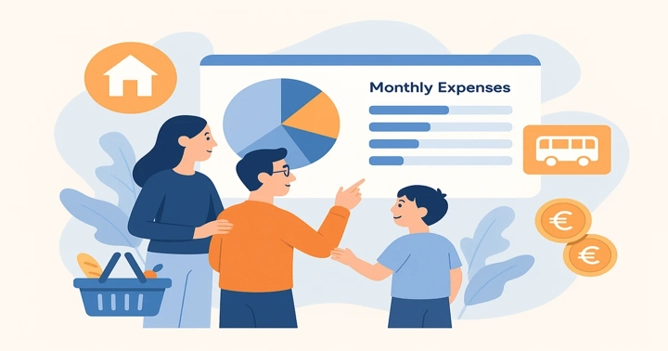
The average cost of living in Germany in 2026 is around €1,800 to €2,200 per month for a single person in a major city, covering rent, food, health insurance, transport, and the occasional dinner out. In smaller cities and towns, that number drops noticeably. For a family of four, expect somewhere between €4,000 and €5,500 monthly, with rent doing most of the heavy lifting. According to Destatis (Germany’s Federal Statistical Office), housing alone accounts for roughly 35% of household spending across German cities.
When I arrived in Freiburg in 2014 with two suitcases and a rough idea of what things would cost, I quickly learned that the numbers I’d read online meant very little until I understood how German cities differ from each other. A single person renting a room in Leipzig lives a completely different financial life than a family renting a three-bedroom apartment in Munich. That’s not a vague disclaimer. It’s the single most important thing to understand before you budget for a move here.
What makes Germany genuinely interesting compared to other Western European countries is the value you get for what you spend. The OECD Better Life Index ranks Germany above average for well-being, healthcare quality, and education access. And yet rents in Berlin or Hamburg still sit well below London, Paris, or Zurich. That combination of quality and relative affordability is a big part of why people keep moving here, and honestly, why I stayed.
This guide breaks down every major expense you’ll face in Germany: apartment rent (Kaltmiete, meaning the base rent before utilities), groceries, Krankenversicherung (statutory health insurance), transport, childcare, and more. The figures are sourced from current 2026 data, and I’ve layered in over a decade of living here so you get real numbers you can actually plan with, not just vague ballpark estimates.
General Cost of Living in Germany
The average German household spends around 2,700 euros per month, according to Destatis (the Federal Statistical Office). That figure covers rent, utilities, food, transport, and leisure combined. What it doesn’t capture is how dramatically that number shifts depending on where in the country you actually live.
Housing accounts for the largest share, roughly 900 euros per month when you factor in Kaltmiete (base rent before utilities), heating, and ancillary building costs. Groceries run around 350 euros per month for an average household, which is broadly consistent with what you’d spend shopping across a mix of Rewe and Aldi. Transport adds another 350 euros, and leisure activities contribute around 280 euros. For a single person, the realistic range in 2026 sits between 1,400 and 2,000 euros per month, and where you land in that range depends almost entirely on your city and whether you’re renting alone.
Location is the single biggest variable in this equation. Munich and Frankfurt are the most expensive cities in Germany by a considerable margin. Cities like Leipzig, Dresden, and Bielefeld cost noticeably less, particularly for rent. This isn’t a minor difference. A one-bedroom apartment that runs 1,800 euros per month in Munich might cost 700 euros in Leipzig. Your city choice is effectively your most consequential financial decision before you arrive.
Germany also performs well on international quality-of-life rankings. Mercer’s surveys have historically placed Munich, Frankfurt, and Düsseldorf inside the global top ten for quality of living, and the infrastructure, public transport, and healthcare access that underpin those rankings are genuinely tangible in day-to-day life. HSBC has similarly ranked Germany among the more attractive destinations for expats overall. These things cost money to maintain, and to some extent you do see where your taxes and contributions go.
That said, the country has real affordability pressure points. Destatis defines the Armutsgefährdungsquote (poverty risk threshold) at roughly 14,000 euros of annual net income, and over 15 percent of the population falls below it. Single-person households on one income, single parents, and people with limited formal qualifications are most exposed. Energy prices spiking after 2022 made this worse for many ordinary households, and rents in major cities have continued rising year on year with no sign of stabilising.
Average Cost of Living in Germany
The honest answer is that it depends enormously on where you live and how you live. Most single people spending reasonably comfortably here land somewhere between €1,200 and €1,800 per month all-in, according to cost-of-living data compiled by Destatis in 2026. That number can drop if you share a flat, or climb past €2,500 if you’re renting alone in Munich or Frankfurt.
Average Cost of Living for a Single Person in Germany (2026)
Rent is the biggest variable by far. A room in a shared flat (Wohngemeinschaft, or WG) runs €400 to €600 in smaller cities, while a one-bedroom apartment in a major city will more likely cost €900 to €1,400 per month. If you’re trying to estimate your budget, nail down rent first. Everything else is relatively predictable once you have that number.
Utilities, including electricity, heating, internet, and a phone plan, add roughly €150 to €250 per month depending on your contracts. One charge that catches almost every newcomer off guard is the Rundfunkbeitrag, the mandatory public broadcasting fee, which sits at €18.36 per month per household in 2026. It applies regardless of whether you own a TV.
Groceries are genuinely reasonable compared to much of Western Europe. Shopping at Aldi, Lidl, or Rewe and cooking most meals at home, a single person typically spends €150 to €250 per month. Ordering delivery or eating out regularly will push that figure up quickly, as delivery platforms in Germany carry a noticeable markup on top of already-inflated restaurant prices.
Transport is where Germany has quietly delivered one of its best recent deals. The Deutschlandticket covers all regional trains and local public transit nationwide for €58 per month in 2026. For most people living in or near a city, that’s all they need.
Krankenversicherung (statutory health insurance, which covers around 90 percent of residents) costs roughly €120 to €180 per month for employed adults, with employers legally required to cover half. Your actual out-of-pocket contribution typically lands between €60 and €90. Students pay a reduced rate closer to €110. Private insurance is a separate conversation with a very different cost structure.
Putting those numbers together gives you a working picture:
| Category | Monthly Range |
|---|---|
| Rent (WG room or 1-bed apartment) | €500 – €1,400 |
| Utilities, internet, phone | €150 – €250 |
| Groceries | €150 – €250 |
| Transport (Deutschlandticket) | €58 – €100 |
| Krankenversicherung (employee share) | €60 – €180 |
| Personal spending, hobbies, going out | €100 – €300 |
| Total | €1,018 – €2,480 |
That puts the realistic range for a single person at roughly €1,000 to €2,500 depending on city, lifestyle, and housing setup. The midpoint, around €1,500, holds up as a reasonable planning figure for most mid-sized German cities.
Families naturally face a different picture. A couple with one child can expect to spend €3,000 to €4,500 per month, with childcare (Kita fees) and a larger apartment driving the increase. According to Destatis household expenditure data, the average German household spent €2,870 per month in 2024, a figure that has edged upward with inflation in 2025 and 2026.
These are averages. Where you land within these ranges depends almost entirely on your city and your choices, which is exactly what the rest of this guide breaks down.
Living Cost in Major German Cities
Germany is not one-size-fits-all when it comes to expenses. Where you choose to live can shift your monthly budget by several hundred euros, and that gap is only widening as demand for urban housing keeps climbing. Here is how the major cities compare in 2026.
| City | Avg. 1-Bed Rent (2026) | Est. Monthly Total (Single Person) |
|---|---|---|
| Berlin | €1,000–€1,400 | €1,800–€2,200 |
| Munich | €1,300–€1,800 | €2,200–€2,800 |
| Hamburg | €1,100–€1,500 | €1,900–€2,400 |
| Cologne | €900–€1,200 | €1,600–€2,100 |
Berlin
Berlin surprises many newcomers. It is the capital, yet it remains one of the more affordable major cities in Germany. The city is far from uniform, though. Western districts like Charlottenburg and Mitte run noticeably pricier than many eastern neighbourhoods. According to IW Köln, the average Kaltmiete (base rent before utilities) for a one-bedroom apartment in Berlin in 2026 sits between €1,000 and €1,400 per month depending on location. The city’s multicultural makeup also helps with food costs. International grocery stores, street food markets, and late-night options are everywhere, which can keep your weekly shopping bill lower than you might expect if you shop around.
Munich
Munich is a different world financially. The city has one of the strongest regional economies in Europe, and landlords price accordingly. Finding a one-bedroom apartment below €1,300 per month is genuinely difficult, and anything centrally located pushes well past €1,500. For students, securing university accommodation through the Studentenwerk (the statutory student services organisation) before you arrive is practically essential rather than simply advisable. The average monthly cost of living for a single person in Munich in 2026 easily exceeds €2,200 once you factor in rent, transport, health insurance, and a modest social life.
Hamburg
Hamburg sits in an interesting middle ground. Rents and day-to-day costs are higher than Berlin but softer than Munich, with a one-bedroom apartment typically running between €1,100 and €1,500 per month. The city attracts both professionals and students in large numbers, which keeps housing demand consistently high. Living slightly outside the city centre, particularly in districts like Harburg or Wandsbek, can save you a meaningful amount each month without forcing a long commute.
Cologne
Cologne is often overlooked in cost-of-living conversations. It is cheaper than both Munich and Hamburg, with one-bedroom apartments starting around €900 and averaging closer to €1,200 in popular central areas. According to Destatis data from 2025, Cologne’s consumer price index for housing sits below the national urban average, which makes it one of the more accessible large cities for newcomers on a tighter budget. The large student population keeps affordable cafes, secondhand shops, and budget-friendly neighbourhoods well distributed across the city.
Across all four cities, your biggest variable will always be rent. Getting that right is the foundation of managing your broader Lebenshaltungskosten (cost of living) in Germany.
Salary and Wages in Germany
The average gross household income in Germany sits at around €4,800 per month, according to Destatis. That figure covers an enormous range of situations, though, so it is worth breaking it down. Single men earn roughly €2,800 gross per month on average, while single women earn approximately €500 less. That gap is a persistent and ongoing conversation in German society, and it shows up consistently across industries.
On an annual basis, German households take home around €30,000 after taxes, which places Germany comfortably above the OECD average. Only Switzerland and Luxembourg rank higher in that comparison. That context matters when you are trying to judge whether German salaries actually stretch far enough to cover the cost of living.
As of January 2025, the Mindestlohn (statutory minimum wage) stands at €12.82 per hour gross, with further adjustments expected into 2026. Someone working a standard 40-hour week at that rate earns roughly €2,050 gross per month. In Munich or Frankfurt, that is genuinely tight. In smaller cities, it goes considerably further.
One thing that catches many expats off guard is how much disappears before the money reaches your account. Germany’s tax and social contribution system takes a meaningful share of gross earnings, covering Krankenversicherung (statutory health insurance), pension contributions, and unemployment insurance. Always plan your budget around your Nettolohn (net take-home pay) rather than the gross figure your employer quotes. Germany’s minimum wage sits above Poland and the Czech Republic but below Belgium and the Netherlands, which roughly reflects its position in the broader European cost-of-living picture.
Housing Costs in Germany
Housing will almost certainly be your largest monthly expense in Germany, and the range across different cities is genuinely startling. The difference in rent between Munich and Leipzig can be over €800 per month for a comparable apartment. That said, Germany still offers reasonable value compared to cities like London or Zurich, particularly once you move outside the major urban cores.
Rental Costs
Renting is by far the most common path for expats, and the German rental market has its own logic worth understanding before you start browsing. The first thing that trips almost everyone up is how apartments are listed. German listings use Zimmer (rooms), which counts living rooms and dining rooms but not bathrooms, hallways, or kitchens. A 4-Zimmer Wohnung typically means two bedrooms plus a living room and dining room.
According to Destatis, average asking rents in Germany rose roughly 5% year-on-year through 2025, with the pressure concentrated heavily in the major cities. In 2026, Munich remains the most expensive market by a significant margin, where a one-bedroom apartment (Einzimmerwohnung) in a central neighborhood typically runs €1,500 to €2,000 per month in cold rent (Kaltmiete, the base rent excluding utilities). Frankfurt and Hamburg sit close behind at €1,200 to €1,800. Berlin has shed its budget-friendly reputation entirely and now averages €1,200 to €1,600 for a one-bedroom. On the more affordable end, cities like Leipzig, Bremen, and Dortmund still offer one-bedroom apartments under €800 per month.
| City | 1-Bed Avg. Kaltmiete (2026) | Range |
|---|---|---|
| Munich | €1,750 | €1,500 – €2,000 |
| Frankfurt | €1,500 | €1,200 – €1,800 |
| Hamburg | €1,450 | €1,200 – €1,750 |
| Berlin | €1,400 | €1,200 – €1,600 |
| Cologne | €1,200 | €950 – €1,450 |
| Wolfsburg | €900 | €750 – €1,100 |
| Leipzig | €750 | €600 – €950 |
Suburbs are genuinely worth considering if you have flexibility on commuting. Rents drop noticeably once you cross city boundaries, and German public transport often makes the commute workable without much sacrifice.
One thing that catches nearly every newcomer off guard: most German apartments come unfurnished in a way that goes well beyond what you might expect. No light fixtures. No kitchen. Sometimes no fitted mirror in the bathroom. The Küche (kitchen, including all fitted units and appliances) is often either missing entirely or offered separately at a negotiated price. Budget for this setup cost when calculating your true move-in expenses.
Property Costs in Germany
Buying property in Germany is a serious commitment, and the price gap between cities is genuinely striking. According to Destatis, the median purchase price in Munich reached approximately 7,882 euros per square meter in 2026, making it the most expensive major city in the country by a significant margin. Bavaria as a whole sits at the top of the pricing ladder, and Munich in particular costs roughly three times more per square meter than cities in the Ruhr or eastern Germany.
Here is how average Kaufpreise (property purchase prices) compare across the major cities in 2026:
| City | Avg. Price per m² |
|---|---|
| Munich | ~€7,882 |
| Berlin | ~€4,743 |
| Frankfurt | ~€4,138 |
| Stuttgart | ~€4,037 |
| Cologne | ~€3,609 |
| Düsseldorf | ~€3,338 |
| Dortmund | ~€2,071 |
Berlin saw some of the sharpest increases in the early 2020s, with double-digit annual jumps. The market has cooled since then, but prices in the capital remain high for a city that was, not long ago, famous for being one of Western Europe’s more affordable capitals.
For genuine value, Dortmund and other Ruhr cities stand out. The trade-off is real though. Job concentrations in finance, tech, and automotive remain skewed toward Munich, Frankfurt, and Berlin, so where you buy is often dictated by where your career actually takes you.
Renting and buying are also two fundamentally different conversations in Germany. Renting gives you flexibility while you’re finding your footing, especially in the early years. Buying makes more sense once you have stable residency, a long-term employer, and a clearer sense of where you want to settle. The Grunderwerbsteuer (property transfer tax) alone ranges from 3.5% to 6.5% depending on the federal state, which means jumping in too early can be costly.
Domestic Bills Cost in Germany
Germany has some of the highest electricity prices in Europe per kilowatt-hour, and the Energiewende (the national transition toward renewable energy) is a big reason why. Green energy surcharges and grid fees get folded directly into your bill, so even as wind turbines multiply across the North Sea coast, the invoices keep climbing. According to Destatis, German households paid an average of €0.31 per kWh for electricity in 2025, among the highest rates in the EU.
One thing that catches newcomers off guard is how billing actually works. You pay a monthly advance based on estimated consumption, then receive a Jahresabrechnung (annual settlement statement) that either charges you extra or returns the difference. Getting money back feels like a small victory. Paying a large top-up in January does not.
For a typical 85 square meter apartment, here is what you would expect to pay monthly across electricity, gas, water, and waste disposal combined in 2026:
| City | Monthly Utilities (est.) |
|---|---|
| Berlin | ~€234 |
| Hamburg | ~€233 |
| Cologne | ~€249 |
| Düsseldorf | ~€217 |
| Frankfurt | ~€279 |
| Munich | ~€257 |
Frankfurt consistently comes out as the priciest, which surprises most people. Munich gets all the attention for being expensive, but Frankfurt utilities quietly punch above their weight.
One genuinely useful way to cut costs is switching electricity providers. The German market is deregulated, meaning you are not locked into whoever your landlord originally used. Comparison platforms make it fairly painless, and the annual savings can run into the hundreds of euros.
Internet and Phone Bills
Home broadband in Germany typically costs between €35 and €45 per month for a standard DSL or cable connection. Fiber availability has improved in larger cities, but rollout remains patchy in smaller towns and suburban neighborhoods, so actual speeds vary considerably depending on where you live.
There is also the Rundfunkbeitrag (public broadcasting fee), currently set at €18.36 per month per household. It covers ARD, ZDF, and public radio. It applies to every household in Germany, regardless of whether you own a television or ever plan to watch one. It is not optional.
Healthcare Costs in Germany
Germany’s healthcare system is one of the more genuinely impressive things about living here. Once you’re enrolled, you’re covered for most situations without receiving a bill that makes you question your life choices. The legal position is simple: every person residing in Germany must have health insurance. There is no opt-out.
For employed expats, enrollment is largely automatic. Your employer splits the contribution with you, and according to the GKV-Spitzenverband (the national association of statutory health insurers), the combined statutory rate in 2026 sits at 14.6% of gross salary, plus an insurer-specific additional surcharge averaging around 1.7%. Your half gets deducted from your paycheck before you ever see it, which makes it feel less like a bill and more like a fact of life.
The monthly amount you actually contribute depends on your income. Employed professionals on public insurance typically pay between €300 and €450 per month. Students get a much better deal, paying a subsidized flat rate of roughly €110 to €130 per month through the public system. Self-employed expats carry the full contribution themselves, which pushes many toward private insurance (private Krankenversicherung, or PKV), where premiums can range from €200 to over €800 per month depending on age, health history, and the plan you choose.
Day-to-day, the public system is genuinely functional. Doctor visits, hospital stays, specialist referrals, and most prescriptions come with either no cost or a small co-pay. Prescription co-pays under the gesetzliche Krankenversicherung (GKV, statutory health insurance) are capped at €10 per item, and many medications come in well below that. For most expats on public insurance, out-of-pocket healthcare spending is a minor line item rather than a financial burden.
The bigger decision is which system to choose. Public insurance covers your non-earning dependents at no extra cost, which matters enormously for families. Private insurance often means shorter waiting times and broader coverage, but premiums rise significantly with age and dependents are not covered for free.
| Factor | GKV (Public) | PKV (Private) |
|---|---|---|
| Monthly cost (employed) | €300–€450 | €200–€800+ |
| Dependents covered | Yes, free | No, extra premium |
| Waiting times | Longer for specialists | Generally shorter |
| Available to | All employees | High earners, self-employed |
Public vs Private Health Insurance in Germany
Check out our detailed article on Health Insurance Guide.
Transport Costs in Germany
Germany’s public transport network is genuinely good. Trains run frequently, buses cover routes that would surprise you, and once you stop overthinking the zone system, buying tickets becomes automatic.
A single journey in 2026 typically costs between €2.70 and €4.00 depending on the city and how many zones you cross. Monthly passes, which most residents end up on, usually fall between €60 and €90. Munich’s MVV (Münchner Verkehrsgesellschaft) network sits at the expensive end of that range, while smaller cities come in noticeably cheaper.
If you travel intercity with any regularity, the BahnCard is worth serious consideration. The BahnCard 25 gives you 25% off all Deutsche Bahn tickets and pays for itself within a handful of trips. The BahnCard 50 halves your ticket price, which makes a real difference if you’re commuting between cities each week.
One thing that catches newcomers out: fare dodging carries a standard Erhöhtes Beförderungsentgelt (elevated fare penalty) of €60 across most German networks. It is enforced, and inspectors do not negotiate. Not worth it.
| Transport Option | Typical 2026 Cost |
|---|---|
| Single journey ticket | €2.70 – €4.00 |
| Monthly city pass (Monatskarte) | €60 – €90 |
| BahnCard 25 (annual) | ~€62.90 (2nd class) |
| BahnCard 50 (annual) | ~€255 (2nd class) |
| Taxi base fare | €3.20 – €4.00 |
| Petrol per litre | €1.75 – €1.85 |
Owning a car adds up faster than most people expect. Petrol in 2026 runs around €1.75 to €1.85 per litre according to ADAC price tracking, and that is before you factor in Kfz-Steuer (vehicle tax), liability insurance, and city parking fees. In Berlin, Hamburg, or Munich, plenty of residents go years without a car and never miss it.
Taxis are everywhere but not cheap. Base fares start around €3.20 to €4.00 depending on the city, with Munich consistently at the higher end. Uber operates in major German cities too, though the model works differently here. Under German law, Uber drivers must hold a commercial passenger transport licence, so you are essentially booking a licensed taxi operator through an app rather than a private driver.
For anyone working out the
as a single person, budgeting €70 to €80 per month for a Monatskarte (monthly travel pass) is a reasonable baseline. Work from home, or live somewhere compact enough to cycle, and you can cut that to near zero.Study Cost in Germany
Germany’s education system is one of the few genuine bargains in a country that doesn’t hand those out often. Public universities charge no tuition fees for most students, including internationals, at the undergraduate level. You will still pay the Semesterbeitrag (semester contribution) each term, which typically runs between €150 and €350 and usually covers administrative costs plus a regional public transport pass. That’s it. A full degree for the price of a bus ticket is not a bad deal.
For expat families with school-age children, public schools are free. Children tend to adapt faster than parents expect once they’re in a German-language classroom every day. Most schools have integration support structures in place, and the immersion tends to work even when it feels brutal at first.
International schools are the alternative for families who need English-language instruction or want continuity with a curriculum from home. The cost difference is significant. According to data from international school networks active in Germany, comprehensive international school fees in 2026 typically start around €16,000 per year and can exceed €20,000 depending on the institution and city. Junior school fees generally run 30 to 50 percent lower. Bilingual schools sit somewhere in the middle, with monthly fees often above €600.
The schooling decision is one of the biggest levers in the cost of living calculation for any expat family. A family using public schools pays nothing for education. A family with one child at an international school might spend €20,000 or more annually on tuition alone. That gap can dwarf differences in rent or groceries, and it’s worth sorting out before you sign a lease somewhere.
Childcare Costs in Germany
Childcare costs in Germany vary significantly depending on where you live, your household income, and whether you use the public or private system. For families calculating the cost of living in Germany with children, this distinction matters enormously.
Public daycare centers are called Kitas (Kindertagesstätten), and they are heavily subsidized by state governments. Berlin is the most cited example: public Kita spots there are free for children from age one onwards. Hamburg, Bavaria, and North Rhine-Westphalia use sliding-scale fees tied to parental income, so lower-earning households pay considerably less. In practice, monthly contributions at a subsidized Kita typically fall between 0 and 400 euros depending on city and income bracket. According to the German Youth Institute (Deutsches Jugendinstitut), Kita coverage for under-three-year-olds reached around 35% nationally in 2025, though this varies sharply by region.
One structural reality worth knowing: East German states still have higher Kita enrollment rates than West German ones, a direct legacy of GDR-era policy when full-time dual-income households were the norm and childcare infrastructure was built to match. West Germany has been catching up, but availability in cities like Munich or Frankfurt remains tight. Every expat parent I’ve spoken to wishes they had joined the waitlist earlier than they did.
Private and international Kitas exist primarily to fill the gap when public spots aren’t available, or to serve expat families seeking English-language environments. Monthly fees at these facilities range from 800 to 2,000 euros, with international preschools in Munich and Berlin regularly sitting at the top of that range.
For home-based care, a private Tagesmutter (registered childminder) or nanny is another route families take. Full-time nanny salaries in Germany average around 1,500 euros net per month, rising in high-cost cities like Munich. Some families arrange cost-sharing with another household, which can make the numbers more workable.
Once children reach school age, public schooling is free across all German states, as covered in the education section of this guide. International schools are a separate category entirely, with annual fees typically running between 10,000 and 25,000 euros per child. That’s a line item most expats on locally-negotiated contracts cannot absorb without employer sponsorship.
Food and Drink Costs in Germany
Food is one area where Germany genuinely surprises newcomers. It’s cheaper than most Western European countries, but where you shop makes a bigger difference than you might expect.
Groceries
According to Destatis, German households spend around 14 percent of their income on food, drinks, and tobacco combined. In practical terms, a single person typically spends €200 to €220 per month on groceries. Couples land around €365 monthly, and a family of four should budget somewhere between €500 and €550. These figures assume reasonably sensible shopping habits.
And sensible shopping in Germany means paying attention to which chain you walk into. Rewe and Tegut sit at the premium end. Aldi and Lidl run around 10 to 15 percent cheaper for everyday staples, and the quality is honestly fine. Both discount chains have improved significantly over the years and stock solid private-label products that most people can’t meaningfully distinguish from branded alternatives.
Eating Out
A typical weekday lunch at a casual restaurant costs between €8 and €12. Many Germans skip the sit-down lunch entirely and grab something from a bakery instead, where a filled roll or sandwich runs €4 to €6. Dinner at a mid-range restaurant sits around €15 to €30 per person, though anything more upmarket pushes well past €50. According to Destatis data, the average German household spends approximately €157 per month dining out in 2026.
Tipping is not built into the bill here. The standard approach is to round up or leave roughly 10 percent. Germans typically announce the total they want to pay rather than leaving cash on the table.
Beer and Wine
A 0.5L beer at a bar or Biergarten (beer garden) costs between €4 and €5.50 depending on the city and venue. Supermarket beer is in a different category entirely. A 0.5L bottle typically runs €0.70 to €1.70, which feels almost implausible if you’re arriving from the UK or Australia. Wine from a supermarket starts around €3 to €4 for something genuinely drinkable. Spirits vary by brand, but mid-range vodka sits around €12 to €15, and Aldi or Lidl regularly stock decent options for €5 to €9.
Food costs in Germany are manageable, sometimes very manageable, as long as you’re not defaulting to the pricier supermarkets out of habit. Cooking at home and shopping at Aldi or Lidl for staples while treating Rewe as a top-up store is the approach that keeps most expats within a sensible budget without sacrificing much.

Jibran Shahid
Hi, I am Jibran, your fellow expat living in Germany since 2014. With over 10 years of personal and professional experience navigating life as a foreigner, I am dedicated to providing well-researched and practical guides to help you settle and thrive in Germany. Whether you are looking for advice on bureaucracy, accommodation, jobs, or cultural integration, I have got you covered with tips and insights tailored specifically for expats. Join me on my journey as I share valuable information to make your life in Germany easier and more enjoyable.