Job Interview Questions in Germany [2026] - Live In Germany
A German job interview (Vorstellungsgespräch) typically runs 45 to 90 minutes and follows a noticeably structured format that catches many expats off guard the first time. I learned this the hard way in 2015 in Freiburg, when I walked into my first interview expecting casual small talk and got a methodical, competency-focused conversation instead. Knowing what to expect changes everything.
Germany’s job market remains competitive but active. According to the Bundesagentur für Arbeit (Federal Employment Agency), over 700,000 vacancies were registered across Germany in early 2026, meaning interviewers have options and they use the Vorstellungsgespräch to filter seriously. Getting that call is genuinely an achievement worth acknowledging.
This guide covers the most common job interview questions in Germany, how a german job interview actually flows, what interviewers are really testing, and where candidates typically lose points. Whether you’re preparing for an interview in German or in English at a German company, the underlying expectations are largely the same. German employers value preparation, directness, and self-awareness over charm. Understanding those cultural expectations before you walk in is half the battle.
What Are the Most Commonly Asked Job Interview Questions in Germany?
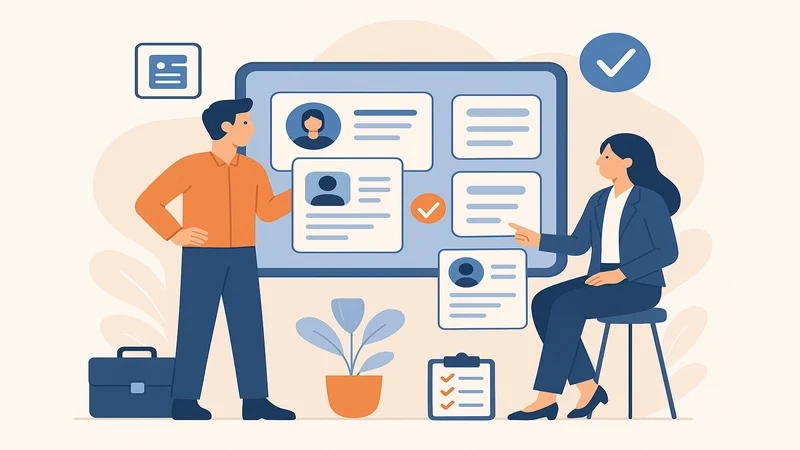
German interviewers tend to follow a structured line of questioning, moving from who you are to why you want the role to how you handle pressure. The questions themselves are rarely surprising. What catches candidates off guard is the level of directness German recruiters bring to each one. Here is what you should genuinely prepare for.
“Erzählen Sie uns etwas über sich selbst!” (Tell me about yourself)
This is almost always the opening question in a German job interview, and it deserves more than a rehearsed summary of your CV. German recruiters use this moment to assess how clearly you communicate and whether your professional narrative matches the role. Keep your answer focused on your qualifications, relevant work experience, and why your career path has led you to this specific position. Mentioning your arrival in Germany and your motivation for working in the German market can add genuine context, especially for expat candidates. Aim for two to three minutes. Longer than that and you risk losing the room.
“Was wissen Sie über unsere Firma?” (What do you know about our company?)
According to the Bundesagentur für Arbeit (Federal Employment Agency), preparation and research are among the top factors German employers use to distinguish serious candidates from casual ones. Before your interview, go through the company’s website, recent press releases, and any news coverage from the past year. Reference something specific, a product launch, a recent expansion, their stated values. Generic praise reads as laziness to most German interviewers.
“Was war die größte Herausforderung Ihres Lebens?” (What was your greatest challenge?)
Frame your answer around a professional challenge rather than a personal one. German interviewers are listening for how you diagnosed the problem, what steps you took, and what outcome you produced. Concrete results matter here far more than emotional storytelling.
“Worin liegen Ihre Schwächen?” (What are your weaknesses?)
This question trips up a lot of candidates who default to disguised strengths like “I work too hard.” German recruiters see through that immediately. Choose a real professional weakness, describe how you became aware of it, and explain what you are actively doing to address it. That combination of self-awareness and accountability is what makes the answer land well.
“Worin liegen Ihre Stärken?” (What are your strengths?)
Be specific and tie each strength directly to the job description. Saying you are “a good communicator” adds nothing. Saying you have successfully led cross-functional teams across three time zones in a previous role gives the interviewer something to work with.
What we like
- German interviews follow a predictable structure, so thorough preparation gives you a clear advantage
- Interviewers value honesty about weaknesses over polished deflection, which rewards authentic candidates
- Prior company research is explicitly valued and often results in stronger first impressions
- Structured answers tied to the job description align naturally with the German preference for Fachkompetenz (professional competence)
What we did not like
- The directness of German questioning can feel abrupt if you are coming from a more indirect interview culture
- Small talk before the formal questions is minimal, leaving little time to settle nerves
- Answers that are too long or too informal can signal poor communication skills to a German recruiter
What Is Assessed in a Job Interview in Germany?
Before diving into specific german interview questions, it helps to understand what German employers are actually evaluating. A job interview in Germany is not just a skills check. Recruiters are looking at several dimensions simultaneously, and walking in without knowing this is how candidates undersell themselves.
German Language Proficiency
How much German do you need for a job interview in Germany? It depends on the role, but for most positions at German companies, B2 level (upper intermediate) is the practical minimum. Not every role in Germany requires German, but many do. For an Ausbildung (vocational training programme) interview in Germany, you will generally need at least A2 to B2 level proficiency according to the Common European Framework of Reference (CEFR). Where language is listed as a requirement, expect it to be assessed live during the interview itself, not just on paper. If you are unsure where your level sits, test yourself honestly before applying.
Relevant Work Experience and Technical Skills
Qualifications get you the interview. Work experience is what keeps you in the room. German interviewers tend to ask structured, scenario-based questions that probe how you have applied your skills in real situations. According to the Bundesagentur für Arbeit (Federal Employment Agency), Germany faces a Fachkräftemangel (skilled labour shortage) in over 200 occupational categories as of 2026, which means demonstrable expertise carries serious weight. Vague answers about “teamwork” will not cut it here.
Need Help with Your German CV?
Check out our detailed article on German CV (Lebenslauf) in English.
Your Genuine Interest in the Role
German hiring managers are quite good at spotting candidates who applied to fifty jobs and landed here by accident. Your preparation signals intent. Researching the company, understanding the role, and asking informed questions at the end of the interview all communicate that this opportunity matters to you specifically.
Professional Appearance
First impressions count, and Germany leans conservative when it comes to interview dress codes. The safest move is to research the company’s culture beforehand. A startup in Berlin operates differently from a Mittelstand (mid-sized traditional German company) manufacturer in Bavaria, and your attire should reflect that awareness.
Creating A Retirement Plan
Most working professionals in Germany build what’s called a three-pillar retirement strategy rather than relying on any single source of income in old age. The first pillar is the gesetzliche Rentenversicherung (statutory pension insurance), which is mandatory for most employees and funded through monthly contributions split between employer and employee. The second pillar covers occupational pension schemes offered through your employer, known as betriebliche Altersvorsorge (company pension provision). The third pillar is private savings and investment products you arrange independently.
Working with a financial advisor who understands the German system is genuinely worth it if your situation is complex, especially if you’re an expat with contribution gaps from years spent abroad. They can help you maximise state incentives like the Riester-Rente subsidy program. It offers government top-ups for qualifying private pension contracts. According to Deutsche Rentenversicherung, the standard contribution rate for statutory pension insurance in 2026 remains at 18.6% of gross salary, split equally between employer and employee. That adds up over a career, but for many expats who arrived in Germany mid-career, it still won’t be enough alone.
Your Personality Matters More Than You Think
German job interviews tend to be structured and formal, but that doesn’t mean personality is irrelevant. Interviewers here pay close attention to how you carry yourself from the moment you walk in. Calm confidence reads much better than rehearsed enthusiasm. Being polite, composed, and genuinely engaged in the conversation will serve you far better than trying to be the most energetic person in the room.
How Job Interviews Actually Work in Germany
How does a German job interview actually work? Most interviews follow a set sequence: a brief welcome, a structured self-introduction, competency-based questions, and a closing round where you ask your own questions. The format of a german job interview will feel familiar if you’ve interviewed anywhere in Europe, but the cultural expectations differ in subtle ways that matter. Punctuality is non-negotiable. Arriving 10 to 15 minutes early is standard practice, and being late without immediate notice is considered a serious mark against you. Bring printed copies of your Bewerbungsunterlagen (application documents, including CV, certificates, and references). Make sure to include your Lebenslauf, which is the standard German resume format, along with any certificates and reference letters. Digital-only is still not the norm in many German companies, particularly in traditional sectors.
Greetings and the First Few Minutes
You’ll typically be greeted either in a meeting room or at reception by one or more interviewers. Larger companies, or those hiring for senior roles, often bring in a panel of two to four people representing different departments. The greeting dynamic in Germany is worth knowing before you arrive.
Handshakes remain the standard professional greeting in formal settings, though since the pandemic some workplaces have moved away from them. The safest approach is to wait for the interviewer to initiate. If no handshake is offered, a confident smile and a direct “Guten Morgen” or “Guten Tag” with eye contact is perfectly appropriate and shows cultural awareness.
The opening small talk is brief by design. Interviewers might ask whether you found the location easily or how your journey was. Some companies offer a drink before things begin. Accept it if you like, and stick to water, coffee, or tea. The interview itself usually follows a clear sequence after that, moving quickly into structured questions about your background and qualifications.
Dos and Don’ts for a Job Interview in Germany
Cultural expectations in a German job interview are specific enough that getting them wrong can cost you the role even if your qualifications are perfect. Here is what actually matters.
What we like
- Arrive 10 to 15 minutes early. Punctuality is not a courtesy in Germany. It is a baseline expectation. Showing up on time means showing up early.
- Dress appropriately for the company culture. A conservative suit works for banking or law; a smart business-casual look is usually fine for tech or startups. When in doubt, overdress slightly.
- Greet formally. "Freut mich" (pleased to meet you) or "Guten Tag" with a firm handshake is the standard opening. Use Sie (formal "you," used with strangers and professional contacts) throughout unless the interviewer explicitly switches to du (informal "you," used with friends and close colleagues).
- Research both the company and, if you know the name, the interviewer. Germans appreciate preparation and tend to notice when candidates have done their homework.
- Know your salary expectations before you walk in. Vague answers here come across as either unprepared or evasive. According to the Federal Employment Agency (Bundesagentur für Arbeit), knowing the Tarifvertrag (collective wage agreement setting minimum pay by sector) for your sector gives you a credible anchor for this conversation.
- If you are on a visa, know your working hour limits in advance. This question can come up, and fumbling it looks careless.
What we did not like
- Do not initiate a handshake if the interviewer has not extended their hand first. Read the room.
- Do not use informal German phrases or slip into du prematurely. Formal language signals professionalism in a German job interview context.
- Do not ramble when asked to introduce yourself. A focused two-minute answer is far better received than a ten-minute life story. German interview culture rewards precision.
- Do not leave dress code to guesswork. Check the company's website or LinkedIn for photos of the team. Showing up significantly over- or under-dressed signals poor research.
One thing that catches many expats off guard is how literal German interviewers can be. If they ask about your weaknesses, they genuinely want a real answer, not a polished non-answer like “I work too hard.” Honesty delivered with composure lands far better here than corporate spin. In Germany, a candidate who gives a thoughtful, honest answer about one real weakness will consistently outperform a candidate who deflects with a disguised strength.
Bottom Line
A German job interview rewards preparation, not improvisation. Hiring managers in Germany expect you to know your Lebenslauf (CV) inside out, speak precisely about your Werdegang (professional career history and development), and arrive with a clear understanding of what the role actually demands. Vague answers land badly here.
According to the Bundesagentur für Arbeit, Germany recorded over 700,000 open vacancies in early 2026, which means qualified candidates genuinely have leverage. Use it by showing up prepared rather than hoping personality alone carries the day.
The cultural expectations around job interviews in Germany are different from what most expats are used to. Directness is respected. Overconfidence is not. Punctuality is non-negotiable. These are not soft suggestions.
If you have worked through the German interview questions covered in this guide, you are already ahead of most candidates who walk in underprepared. One final practical tip: always send a short follow-up email after your interview thanking the panel for their time. It is not universally expected, but in my experience from my own job search in Freiburg in 2015, it left a noticeably positive impression.

Jibran Shahid
Hi, I am Jibran, your fellow expat living in Germany since 2014. With over 11 years of personal and professional experience navigating life as a foreigner, I am dedicated to providing well-researched and practical guides to help you settle and thrive in Germany. Whether you are looking for advice on bureaucracy, accommodation, jobs, or cultural integration, I have got you covered with tips and insights tailored specifically for expats. Join me on my journey as I share valuable information to make your life in Germany easier and more enjoyable.