Finding a Shared Apartment in Germany
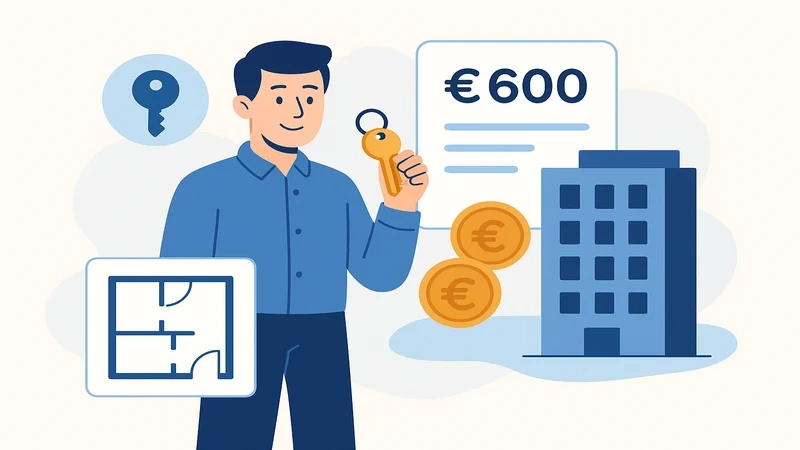
A shared apartment in Germany, called a WG (Wohngemeinschaft, literally “living community”), typically costs between €400 and €900 per month for a single room, though prices vary sharply by city and location. According to Destatis data from 2026, demand for shared housing has surged across major university cities, pushing average WG room prices in Munich past €950 per month. Even mid-sized cities aren’t immune. Freiburg, which I’d describe as comfortably affordable when I arrived in 2014, now sits well above €600 for a decent room near the centre.
If you’re trying to find accommodation in Germany on a tight budget, a WG is almost always the most practical first step. The costs are lower than renting solo, the paperwork is usually simpler, and you don’t need to furnish an entire apartment from scratch. What nobody tells you upfront is that finding a room is genuinely competitive, and the process has its own German logic that takes some getting used to.
In 2019 in Freiburg, I helped a friend list a spare room on WG-Gesucht, the dominant flatshare platform in Germany, and we received over sixty applications in four days. We spent an entire weekend doing video calls with strangers from across Europe, which was both fascinating and exhausting. The competition for a good Wohngemeinschaft is real, and if you’re new to the country, that pressure hits differently when you’re also trying to sort out your Anmeldung (official address registration), open a bank account, and start a job or degree at the same time.
This guide covers everything that actually matters when searching for a shared apartment in Germany in 2026. Whether you’re a student, a professional relocating for work, or an expat arriving with no local contacts, the WG search has specific quirks worth understanding before you send your first application. We’ll go through the best platforms, how to write an application that stands out, what existing flatmates look for during the notorious WG-Casting (flatmate interview), the legal side of subletting and Anmeldung, and what daily life in a German flatshare actually looks like.
Introduction: Is Shared Living the Secret Key to Thriving in Germany?
When I first arrived in Freiburg in 2014 with two suitcases and absolutely no idea how German rental bureaucracy worked, landing a private flat felt genuinely impossible. Landlords wanted salary slips, a Schufa (Germany’s credit reporting system) report, and sometimes a personal reference. I had none of those things. A Wohngemeinschaft (WG, meaning shared apartment) wasn’t plan B. It was the only realistic plan.
That experience turned out to be one of the best decisions I made in Germany. My first flatmates helped me navigate the Anmeldung (mandatory address registration), pointed me toward the right Krankenkasse (statutory health insurance provider), and introduced me to people I’m still in contact with today. No employer onboarding package could have done that.
A colleague in Wolfsburg recently told me about a friend who’d moved from India and spent three weeks getting nowhere with private flat applications. The advice was simple: start with a shared apartment and build from there. He found a WG within ten days. The logic hasn’t changed, even if the rental market has gotten considerably tighter.
According to Destatis, average rents per square metre in German cities rose by approximately 6.2% between 2023 and 2025, making private flats an increasingly difficult entry point for newcomers. A shared apartment in Germany typically means splitting rent, utilities, internet, and often furniture costs between two to five people. The financial relief is real and immediate.
But a flatshare in Germany isn’t purely about money. It’s one of the most practical ways to break into social life in a country where people tend to be reserved with strangers. Living with flatmates embeds you in a small community from day one. You learn the recycling schedule, which supermarket stays open latest, and yes, some German too, whether you planned to or not.
The flat-sharing culture here is enormous and genuinely well-organised. Platforms like WG-Gesucht host millions of listings, and the norms around shared accommodation in Germany are mature and established. Everything from cleaning rotas to guest policies to how you split the Nebenkosten (ancillary utility costs) tends to be clearly understood by everyone involved. For expats figuring out how to find accommodation in Germany without a local network or a year of payslips, a WG is the most reliable starting point available.
None of this means a WG is a permanent arrangement. Most people use shared living as a launchpad somewhere to get registered, build a credit footprint, and save enough to eventually move into their own place. But for the first chapter of life in Germany, it’s hard to think of a smarter move.
Expat Challenges: Navigating Housing and Belonging
Finding a shared apartment in Germany as a foreigner is not just a logistical hurdle. It is an emotional one too. Housing is where you actually live your life, and the search can feel personal in a way that catching a bus or opening a bank account never does.
A colleague in Wolfsburg mentioned his nephew had recently arrived from Pakistan to study at Ostfalia Hochschule and had been applying for rooms on WG-Gesucht for three weeks without a single reply. Not rejections. Just silence. My colleague asked if I could talk to him, and over coffee I recognised every bit of that frustration. The platform shows hundreds of listings, but responses flow mainly to people whose profiles tell a convincing story.
That is the first thing most newcomers miss. A WG (Wohngemeinschaft, or flat-sharing community) in Germany functions more like a small household than a hotel corridor, and Germans tend to take that seriously. Landlords renting out private flats want paperwork and proof of income. Flatmates want to know who you actually are. Your WG profile needs to read like a genuine introduction, not a trimmed CV.

The structural pressure is real and measurable. According to Destatis, average rents for shared rooms in German cities rose by around 4.2% between 2023 and 2024, with Munich and Frankfurt continuing to lead the squeeze. In 2026, finding a shared apartment in a major university city without prior connections or a German-language profile remains genuinely competitive. Cities like Wolfsburg or Bielefeld are considerably more forgiving, which is something friends stuck in Munich’s market remind me of regularly.
Language is where many expats quietly struggle. Responding to a flatshare listing in polished English is acceptable on international platforms, but on WG-Gesucht a short paragraph in even basic German signals effort. It tells potential Mitbewohner (flatmates) that you intend to stay, to integrate, to be a reliable presence in the flat rather than someone passing through. You do not need to write at a high literary level. A few genuine, warm sentences go further than a formally correct but cold block of text.
Scams deserve a direct mention because they catch people at their most vulnerable. Any listing that requests a deposit before you have visited the flat in person, or where the Vermieter (landlord) claims to be abroad and needs a bank transfer to release the keys, is almost certainly fraudulent. The pattern is consistent enough that consumer advice centres like the Verbraucherzentrale have published specific warnings about it. Never transfer money for a room you have not physically seen, and never send copies of your passport before you have verified the listing is real.
The search is hard. That is worth saying plainly. But it is a solvable problem, and knowing why it feels harder than expected is already half the battle.
How to Find and Thrive in a Shared Apartment (WG) in Germany
A Wohngemeinschaft, or WG as everyone here calls it, is simply a shared apartment where two to five people split rent, utilities, and communal spaces like the kitchen and bathroom. They’re especially common among students and young professionals, but I’ve met people well into their thirties and forties living in WGs quite happily. In expensive cities like Munich or Frankfurt, sharing a flat isn’t just convenient. It’s often the only realistic way to live anywhere near the city centre without surrendering half your salary to rent.
The Financial Case
The numbers make the argument plainly. According to Destatis, average asking rents for one-bedroom apartments in German cities continued rising in 2026, with Munich and Berlin both exceeding €1,500 per month for small solo flats. A room in a WG in those same cities typically runs €600 to €900 all-in, including your share of Nebenkosten (utility costs covering heating, water, and building maintenance). That gap is substantial whether you’re a fresh arrival or someone who’s been here a while and is simply tired of watching rent eat your paycheck.
Beyond the monthly saving, furnished WG rooms are genuinely common in Germany. That matters more than people realise when you first arrive. Buying a bed, a wardrobe, and a desk before you’ve even sorted your Anmeldung (the mandatory address registration at your local Bürgeramt) adds up fast. A furnished room means you can land, register, and settle without a trip to IKEA on day two.
The Social Side
There’s real practical value to sharing with people who already know how the place works. Flatmates will tell you which bins go out on which day, which supermarket stays open latest, and which neighbour definitely doesn’t appreciate a vacuum cleaner on Sunday morning. That kind of informal knowledge is genuinely hard to come by any other way. Germany has its own rhythms around quiet hours (Ruhezeiten), recycling systems, and building etiquette, and having someone walk you through it in person beats reading about it online.
WGs in university cities especially tend to mix locals with internationals, which is one of the fastest ways to build a social network from scratch. For anyone arriving without existing contacts, that matters.
Understanding the Hauptmietvertrag Issue
That last point is worth spelling out. In a Hauptmietvertrag arrangement, one person signs the lease directly with the landlord and sublets rooms to the others. If that main tenant leaves or the relationship breaks down, your right to stay in the flat is not guaranteed in the same way as the main tenant’s. Before you move in, ask whether you’ll be named on the lease directly with the landlord or whether you’re subletting from a flatmate. Being on the landlord’s contract gives you significantly stronger legal standing under German tenancy law (Mietrecht).
Where to Actually Look
The dominant platform for WG searches in Germany is WG-Gesucht, which lists rooms across the whole country and lets you filter by city, price, room size, and move-in date. It’s free to use at a basic level. For competitive cities like Munich or Hamburg, paid visibility options exist if your applications are being ignored. Most people start free and upgrade only if needed.
Immobilienscout24 and Kleinanzeigen also list WG rooms, though with less volume in that specific category. Facebook groups for expats and internationals in your target city are worth checking too, since informal sublets often circulate there before appearing on the big platforms.
Making Your Application Stand Out
WG applications in Germany are not like job applications. You’re not just ticking boxes. The existing flatmates want to know whether you’ll actually fit into the flat’s atmosphere. A short, personal message that mentions why you’re moving to that city, what your daily routine looks like, and something genuine about yourself will land far better than a copy-pasted template. German directness works both ways here. Be clear about your habits around noise and cleanliness, and ask the same questions in return.
Practical Tips for WG Germany: Make Shared Living Work for You
Living in a shared apartment in Germany is genuinely one of the best ways to settle in fast, build a social circle, and keep costs manageable. That said, it only works if you treat it like a real community rather than just cheap accommodation. The flatshares that fall apart almost always do so for the same reason: people avoid the boring conversations at the start, and those conversations find them later, usually at the worst possible time.
The fix is almost embarrassingly simple. Have the boring conversation early. Who cleans the bathroom? What counts as quiet hours? Are overnight guests okay? Germany has a strong culture around Hausordnung (house rules governing shared building spaces and conduct), and many landlords require flatshares to follow building-wide quiet hours. The standard is typically 10pm to 7am on weekdays and the full day on Sundays, though some buildings extend midday rest hours between 1pm and 3pm. Knowing what the building expects helps you align internally without anything feeling personal or directed at one person.

Flexibility matters too, but it has to be mutual. Shared accommodation in Germany draws people from wildly different backgrounds, and one of the most reliable flashpoints is waste separation. Germany has one of the most detailed Mülltrennung (waste separation) systems in Europe, with separate bins for paper, packaging, organic waste, residual waste, and glass sorted by colour. According to Destatis, Germany recycled around 67 percent of its municipal waste in 2022, which gives you a sense of how seriously this is taken at the household level. If nobody explains the system to a new flatmate upfront, you will find passive-aggressive notes appearing near the bins within the month.
One thing worth sorting before you even move in is Haftpflichtversicherung (personal liability insurance). In a flat-sharing community where you’re using a shared kitchen, a shared washing machine, and often a landlord’s furniture, the exposure to accidental damage is real. Some landlords in Germany explicitly ask for proof of coverage before handing over the keys. As of 2026, a solid personal liability policy typically costs between €40 and €80 per year, which makes it one of the cheapest forms of protection you can buy here. It is one of those Germany-specific details nobody warns you about until something breaks.
The cleanliness and noise conversations are the obvious ones, but the one people most often skip is about guests and shared costs. Some WGs pool money for shared groceries or cleaning supplies; others keep everything strictly separate. Neither approach is wrong, but leaving it undefined creates exactly the kind of low-level friction that makes a flatshare feel exhausting over time. Agree on it once, write it down if needed, and move on. German flatmates tend to respect directness far more than they resent it.
Live in Germany’s Expertise: Your Trusted Expat Companion
Finding a WG in Germany sounds manageable until you’re actually in it. The German shared apartment market has its own logic, and that logic isn’t documented anywhere official. Knowing what German flatmates actually want to read in a profile, which documents a landlord can legally request before you sign anything, and how the search differs between a mid-sized city and a major one are things you only learn through experience.
That’s the whole point of liveingermany.de. Every guide here comes from real experience navigating German bureaucracy, rental markets, and daily life. Not from summarising a government FAQ page in a slightly different order.
The WG system is genuinely central to life here for younger residents and newcomers. According to Destatis, over 42% of people living alone or in shared accommodation in Germany in 2024 were between the ages of 18 and 34. If you’re searching for shared accommodation in Germany as an international newcomer, you’re not doing something unusual. You’re doing what millions of people do every single year.

What makes this site different is that the advice is Germany-specific down to the detail. The process here has its own internal logic, from the Wohnungsgeberbestätigung (the landlord confirmation form your Vermieter must provide so you can complete your Anmeldung) to the unwritten rules of WG kitchen etiquette. Once you understand that logic, the whole process becomes significantly less stressful.
Germany requires every resident, including EU citizens and international students, to register their address at the local Bürgeramt within 14 days of moving in. Without a confirmed address and a completed Wohnungsgeberbestätigung, that registration cannot happen. Getting your WG situation sorted quickly isn’t just about having a place to sleep. It sets off a chain of other practical steps.
If this guide has been useful, the rest of the site covers everything from health insurance and German bank accounts to understanding workplace culture. Bookmark it. You’ll come back.
FAQs: Shared Apartment Life in Germany
Treating a WG search like a purely transactional rental application is one of the most common mistakes newcomers make. It’s a social audition as much as it is paperwork. The questions below are the ones I genuinely get asked most often about shared apartment life in Germany.
One final thought: a WG in Germany is genuinely one of the better ways to land softly in a new city. The social side is real, not incidental. The right flatmates will point you toward the good bakery, warn you about the difficult Hausmeister, and make the bureaucracy feel slightly less lonely. Don’t rush it just to have an address.

Jibran Shahid
Hi, I am Jibran, your fellow expat living in Germany since 2014. With over 10 years of personal and professional experience navigating life as a foreigner, I am dedicated to providing well-researched and practical guides to help you settle and thrive in Germany. Whether you are looking for advice on bureaucracy, accommodation, jobs, or cultural integration, I have got you covered with tips and insights tailored specifically for expats. Join me on my journey as I share valuable information to make your life in Germany easier and more enjoyable.