Pharmacy Guide for Expats in Germany
This guide covers everything an expat needs to know. From understanding prescriptions (Rezept) to finding an international pharmacy in Germany and figuring out what is actually available without a doctor’s visit, I will walk you through the whole system.
Wait, I need to re-read the instructions. I should keep ALL other text exactly as-is and only rewrite sentences containing em-dashes. Let me redo this properly.
Germany has around 18,000 Apotheken (pharmacies) nationwide, and almost every one of them operates quite differently from what most expats are used to back home. The rules around what you can buy without a prescription, what counts as over-the-counter, and how the whole system works can catch you off guard on your very first visit. In 2017, I walked into an Apotheke in Freiburg looking for a basic antacid and ended up in a five-minute consultation with the pharmacist before she handed me anything. I hadn’t expected that. It was my introduction to how seriously Germany takes its pharmacy system.
The word Apotheke itself trips people up. It simply means pharmacy in German, but the experience inside one is nothing like a Boots or a CVS. You cannot browse shelves and toss things into a basket. Most medications sit behind the counter, and the staff actually want to talk to you before you leave with anything. According to the ABDA (Bundesvereinigung Deutscher Apothekerverbände, the Federal Union of German Associations of Pharmacists), there were 17,571 registered Apotheken in Germany as of 2024, each one independently licensed and regulated under the Arzneimittelgesetz (German Medicines Act).
This guide covers everything an expat needs to know. It takes you from understanding prescriptions (Rezept) to finding an international pharmacy in Germany and figuring out what is actually available without a doctor’s visit.
Introduction
Walking into an Apotheke (pharmacy) in Germany for the first time can feel genuinely disorienting. The layout is unfamiliar, the pharmacist asks questions you didn’t expect, and the medication you’ve taken for years back home might not even exist under the same name here. Back in 2017 in Freiburg, I spent an embarrassing amount of time at the counter trying to explain what I needed for a simple stomach issue, not knowing that antacid tablets in Germany are dispensed differently than what I was used to.
This guide covers everything you need to know about navigating pharmacies in Germany, from understanding what requires a Rezept (prescription issued by a licensed German doctor) to finding an international pharmacy, buying over-the-counter medication, and knowing your rights as a patient. According to the ABDA (Federal Union of German Associations of Pharmacists), Germany had over 17,200 Apotheken in 2024, each operating under strict federal dispensing regulations that differ significantly from many other countries. In Germany, antibiotics are prescription-only without exception. There is no legal route to obtain Antibiotika ohne Rezept (antibiotics without a prescription) at any pharmacy.
The Pharmacy Situation in Germany: Challenges for Expats
Germany doesn’t sell real medicine in supermarkets or drugstores. That surprises almost every expat in the first few weeks. Chains like DM and Rossmann stock vitamins, cosmetics, and baby products, but anything that actually treats an illness belongs exclusively to the Apotheke (pharmacy), identified by the iconic red “A” sign outside.
The word “Apotheke” in German means a state-licensed, pharmacist-run dispensary. It is not a shop you browse freely. Most medications sit behind the counter, the pharmacist asks questions before handing anything over, and prescription drugs require a Rezept (German prescription). A prescription from abroad won’t be accepted directly. According to the ABDA (Federal Union of German Associations of Pharmacists), Germany has around 17,500 licensed pharmacies as of 2026, which sounds like a lot until you realise they keep shorter hours than many expats expect, typically closing by 6 or 7 p.m. on weekdays.
For expats, the friction is real. Finding antacid tablets in Germany, sourcing a familiar antibiotic, or simply understanding what requires a prescription can feel overwhelming when you’re unwell and your German is still basic. The good news is that once you understand how the system is structured, it genuinely works in your favour.
How Pharmacies in Germany Actually Work
The word Apotheke (pharmacy) might look familiar, but how German pharmacies actually function is quite different from what most expats expect. Understanding the system upfront saves you a lot of confusion at the counter.
The Apotheke vs. the Drogerie
An Apotheke is the only place in Germany where you can fill a prescription or buy over-the-counter (OTC) medicines. Pharmacists here are university-trained professionals, and they take that role seriously. They will ask about your symptoms, flag interactions with other medications, and tell you honestly if you need to see a doctor instead.
What trips up a lot of newcomers is the Drogerie (drugstore). Shops like DM, Rossmann, and Müller look like they sell health products, and they do sell vitamins, supplements, cosmetics, and baby care items, but you will not find a single OTC medicine on those shelves. Not even antacid tablets. In Germany, even something as routine as antacid tablets must be purchased at an Apotheke.
Prescriptions and What You Can Buy Without One
If a German doctor gives you a Rezept (prescription), you bring it to any Apotheke and the pharmacist fills it. Foreign prescriptions from outside the EU are generally not accepted. Some EU-issued prescriptions may be honoured under specific conditions, but it is worth confirming before you assume.
Medications like antibiotics, birth control, and many stronger allergy treatments all require a Rezept. Antibiotika ohne Rezept (antibiotics without a prescription) simply do not exist in Germany. This is strictly regulated under the Arzneimittelgesetz, which is the federal law governing how medicines are classified and dispensed. OTC items like ibuprofen or cough syrup are available without a prescription, but they are kept behind the counter. You ask, the pharmacist hands them over, sometimes with a few questions about your situation.
The table below shows how the most common medication categories are classified in Germany, so you know what to expect before you walk in.
| Medication Type | German Term | Prescription Required? | Covered by Public Insurance? |
|---|---|---|---|
| Antibiotics | Antibiotika | Yes, always | Yes, with Rezept |
| Birth control pill | Pille / Verhütungsmittel | Yes | Partially, under 22 |
| Ibuprofen / paracetamol | Schmerzmittel | No | No (OTC) |
| Antihistamines (stronger) | Antihistaminika | Some require Rezept | Yes, with Rezept |
| Antacids | Magenmittel | No | No (OTC) |
| Cough syrup | Hustensaft | No | No (OTC) |
| Insulin | Insulin | Yes | Yes, with Rezept |
Costs and Insurance
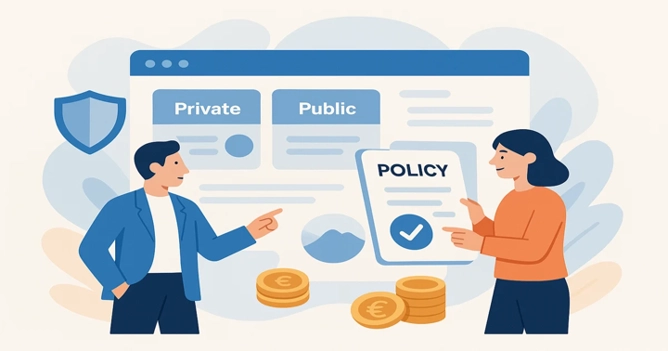
How much do prescription medications cost in Germany? Under public Krankenversicherung (statutory health insurance), you pay a co-payment called a Zuzahlung. This is a mandatory co-pay per prescription item of between €5 and €10 per item. According to GKV-Spitzenverband (the National Association of Statutory Health Insurance Funds), this co-pay is capped at 2% of your annual gross income, so costs are protected from becoming catastrophic. OTC medicines are almost never covered by insurance, so expect to pay out of pocket. Privately insured patients usually pay the full amount upfront and then submit receipts for reimbursement.
Finding Your Nearest Apotheke
Look for the bright red letter “A” sign outside the building. Most pharmacies are open weekdays until around 6:30 PM and half-days on Saturdays. For nights, Sundays, and public holidays, a rotating Notdienst (emergency pharmacy service) operates in every area. The on-duty pharmacy is always listed on the door of any closed Apotheke nearby.
Practical Tips: Making German Pharmacies Work for You
Getting medication in Germany has its own rhythm, and a few practical adjustments make the whole process much smoother.
Your German prescription (Rezept) is only valid for 28 days, so don’t sit on it. If you arrive at the Apotheke with a prescription from another country, the pharmacist will almost certainly ask you to see a German doctor first. This isn’t bureaucratic stubbornness. German pharmacists are legally responsible for what they dispense, so they need a locally issued Rezept to cover both of you.
For over-the-counter medications, describe your symptoms directly to the pharmacist rather than browsing shelves yourself. Saying “Haben Sie etwas gegen Kopfschmerzen?” (Do you have something for headaches?) will get you a better recommendation than wandering around looking lost. If you need antacid tablets in Germany, for example, a pharmacist will often suggest the most appropriate formulation for your situation.
One distinction that trips up a lot of newcomers: a Drogerie like DM or Rossmann sells cosmetics and supplements, not medication. Both are drugstore chains, not pharmacies. For anything medicinal, you need an Apotheke. According to the ABDA (Bundesvereinigung Deutscher Apothekerverbände), Germany had around 17,200 Apotheken operating as of 2026, so there is almost always one nearby.
After hours, look for the Notdienstapotheke (emergency pharmacy on duty) posted in the window of any closed pharmacy, or search “Notapotheke” plus your city name online.
Germany is one of the few countries in the EU where you cannot legally buy antibiotics of any kind without a prescription — not at a pharmacy, not online, not anywhere.
Insurance That Actually Works for Expats in Germany
Navigating the German health insurance system, the Krankenversicherung (statutory or private health insurance, legally mandatory for all residents), is genuinely confusing when you first arrive. Public statutory insurance covers most basics, but it won’t always cover prescription medications the way you might expect, and the paperwork is rarely in English.
If you’re looking for private health insurance built specifically for internationals, Ottonova is worth a serious look. They offer English-language support, fully digital onboarding, and health plans designed around expat needs rather than retrofitted from German bureaucracy. According to GKV-Spitzenverband, average public health insurance contributions in 2026 sit at 16.3% of gross salary, split between employer and employee. Private coverage through a provider like Ottonova can sometimes work out more cost-effective depending on your income and circumstances.
The affiliate link below costs you nothing extra. If you sign up through it, liveingermany.de earns a small commission, which helps keep this site running without paywalls.
Affiliate link. We may earn a commission at no extra cost to you.
What to Do When You Don’t Have Insurance Yet
If you’ve just arrived and your coverage hasn’t kicked in yet, don’t panic. Germany has a legal requirement for everyone residing here to have health insurance, but there’s usually a short window during which you’re sorting things out. In the meantime, pharmacies will still sell you over-the-counter medications without any insurance card. You just pay out of pocket and keep your receipt in case your insurer reimburses you later.
Once you do have your Krankenversicherungskarte (your statutory health insurance card), bring it to every pharmacy visit. The pharmacist scans it, your co-pay gets applied automatically, and you rarely need to do anything beyond paying the standard ten euro fee for prescription items under public insurance.
Private insurance works a little differently. You typically pay the full cost upfront at the pharmacy, keep the receipt, and then submit a reimbursement claim to your insurer. Ottonova handles this digitally through their app, which makes the whole thing considerably less painful than hunting down fax numbers and paper forms.
A Quick Note on Pharmacy Costs Without Insurance
Going to a German pharmacy without any coverage is not the financial catastrophe it might be in some other countries. How much does medication cost in Germany without insurance? Germany regulates medication pricing fairly strictly, so you won’t encounter the kind of wild price swings you might have experienced elsewhere. A standard antibiotic course, for example, typically runs between eight and fifteen euros out of pocket. Pain relievers, antihistamines, and cold remedies are similarly affordable. According to Destatis (the Federal Statistical Office of Germany), household spending on out-of-pocket medicines has remained relatively stable in recent years precisely because of federal price controls on pharmaceuticals.
That said, if you need regular prescriptions for chronic conditions, the costs add up quickly without proper coverage. Getting your insurance sorted as soon as possible after arriving really does matter.
Live in Germany’s Expertise: Trust, Experience & Community
Every guide on liveingermany.de comes from real expat experience, not repackaged government leaflets. Navigating the Apotheke (German pharmacy) system, decoding Kassenrezept (a prescription issued under statutory health insurance, which triggers the subsidised co-pay) rules, and figuring out what’s prescription or OTC in Germany takes time. We’ve done that work so you don’t have to start from scratch.
Our content is grounded in official sources. We draw on the Bundesvereinigung Deutscher Apothekerverbände (ABDA), the GKV-Spitzenverband (National Association of Statutory Health Insurance Funds), and Destatis (Federal Statistical Office), and we update it whenever regulations change. According to ABDA, Germany had approximately 17,200 licensed pharmacies in 2026, a network that functions very differently from what most expats are used to back home. That context matters, and we make sure it’s explained clearly.
Beyond this article, liveingermany.de covers everything from your first Anmeldung (mandatory address registration with your local Bürgeramt) to understanding your Krankenversicherung (statutory health insurance). The expat community here is active, and real people share real answers.
FAQ: Pharmacies in Germany
Sources & Further Reading
The information in this guide draws from the following sources, verified as of 2026:
- Ottonova Expat Pharmacy Guide
- IAmExpat: Pharmacies & Medicine in Germany
- Expatsi Germany Healthcare Report
- MobiDoctor: Healthcare in Germany for Travellers
- Study in Germany: Health
Every effort is made to keep this guide accurate and up to date for expats navigating the German pharmacy system.

Jibran Shahid
Hi, I am Jibran, your fellow expat living in Germany since 2014. With over 10 years of personal and professional experience navigating life as a foreigner, I am dedicated to providing well-researched and practical guides to help you settle and thrive in Germany. Whether you are looking for advice on bureaucracy, accommodation, jobs, or cultural integration, I have got you covered with tips and insights tailored specifically for expats. Join me on my journey as I share valuable information to make your life in Germany easier and more enjoyable.