Step-by-Step Guide for Spouse Visa in Germany
Bring your spouse to Germany in 2026 with this 7-step visa guide. Learn exact documents, costs, and how to avoid the 3 most common rejection reasons.
Getting a spouse visa (Familiennachzug) in Germany takes between 3 and 6 months on average, though processing times vary significantly depending on which German embassy or consulate handles your application.
When I arrived in Freiburg in 2014, I quickly realized how little practical, step-by-step information existed for expats navigating the German immigration system. Most official guidance from BAMF (Bundesamt für Migration und Flüchtlinge, the Federal Office for Migration and Refugees) is thorough but dense, and the gap between what the forms say and what you actually need to do in real life is wider than you’d expect.
This guide closes that gap. According to BAMF’s 2026 data, spousal reunification remains one of the most common grounds for residence permits issued in Germany, which tells you just how many families are going through exactly this process right now. Whether your spouse holds a German passport, a Blue Card, or a standard work permit, the core requirements are similar: a valid marriage certificate, proof of sufficient income, basic German language skills at the A1 level, and adequate health insurance (Krankenversicherung, meaning statutory or private medical coverage). Each of those requirements has details worth knowing before you book your embassy appointment.
Bringing your spouse to Germany involves real paperwork, real waiting times, and at least one trip to an embassy that will test your patience. That said, the spouse visa in Germany is a well-defined legal process, and thousands of couples complete it successfully every year. According to BAMF (Federal Office for Migration and Refugees), Germany issued over 80,000 family reunification visas in 2024 alone, making it one of the most-used visa categories in the country.
A spouse visa (Familiennachzug) in Germany costs €75 in consular fees and typically takes two to six months to process from the date of your embassy appointment. This guide walks you through every stage of the germany spouse visa process, from gathering documents to your first day of legal residence. Whether you are the sponsor living in Germany or the partner applying from abroad, you will find the spouse visa requirements for germany explained in plain language here.
What we like
- Your spouse can work in Germany immediately after the visa is granted, with no restrictions
- The visa leads directly to a residence permit (Aufenthaltserlaubnis, meaning a long-term legal right to reside in Germany) with a clear path to permanent residency
- Both EU and non-EU sponsors can apply for family reunification
- Processing is handled through a structured legal framework under § 30 AufenthG (the German Residence Act, which governs spousal reunification rights)
What we did not like
- Basic German language proof (A1 level) is required from most non-EU applicants before the visa is issued
- Processing times at German embassies can range from 6 to 12 weeks depending on the country
- The sponsoring partner must meet minimum income thresholds to qualify
Why Moving on a Spouse Visa Can Feel Overwhelming for Expats
The paperwork alone is enough to make anyone second-guess the whole plan. To obtain a spouse visa in Germany, your documents typically need certified translations, official apostilles (authentication stamps recognised under international law), and proof that you meet the German A1 language requirement. You need all of this before you even book your embassy appointment. According to BAMF (Bundesamt für Migration und Flüchtlinge, Germany’s Federal Office for Migration and Refugees), incomplete documentation is one of the most common reasons for delays in spousal reunification applications.
Beyond the logistics, there’s a real cultural adjustment at play. Germany operates on Ordnung (a deep-seated culture of order, correct procedure, and paperwork precision), which means submitting “almost right” documents simply doesn’t work here. Questions pile up fast: Will your foreign marriage certificate be accepted? Can you work immediately after arrival? Will your health insurance be valid from day one?
These aren’t irrational fears. The spouse visa requirements for Germany span multiple institutions, from the German embassy abroad to the local Ausländerbehörde (foreigners’ registration office) after arrival. Understanding exactly what each authority needs, and in what format, is what separates a smooth application from a months-long ordeal.
The Practical Step-by-Step Spouse Visa Guide
How do you get a spouse visa in Germany step by step? The process moves through five stages: confirm eligibility, pass a German A1 language exam, gather and certify your documents, submit your application at the German embassy or consulate in your home country, and then convert the entry visa into a full residence permit after arriving in Germany.
Getting a spouse visa in Germany is not complicated once you understand the sequence. The process has a clear order, and skipping steps or submitting incomplete paperwork is the most common reason applications get delayed. Here is how it works in practice.
Eligibility comes first. Your spouse or registered partner must be a German citizen, an EU citizen living in Germany, or a third-country national holding a valid German residence permit or recognized refugee status. Both of you must be at least 18 years old. Same-sex marriages and registered civil partnerships (eingetragene Lebenspartnerschaften, meaning legally registered same-sex unions) are fully recognized under German law.
Language is a real requirement. Unless your spouse holds EU citizenship or recognized refugee status, you will need to demonstrate basic German at A1 level before your visa is issued. That means passing a recognized language exam abroad, typically through Goethe-Institut or telc. This requirement exists under § 30 AufenthG (the German Residence Act) and is enforced consistently. It is not a formality.
Documents to gather. The German consulate will expect a specific set of documents, and every foreign-issued document needs a certified translation into German plus an apostille where applicable. Here is what the application typically requires:
- Completed and signed visa application form
- Valid passports for both spouses
- Recent biometric passport photos
- Legalized marriage certificate or civil partnership proof
- Your spouse’s proof of legal status in Germany (residence permit or EU/German passport)
- Proof of registered address in Germany (Meldebescheinigung, meaning the official confirmation of address registration, or rental contract)
- Evidence of sufficient income and valid Krankenversicherung (statutory or private health insurance) covering both of you
- A1 German language certificate
- Travel health insurance for initial entry
- Visa fee of approximately €75
According to the German Federal Foreign Office (Auswärtiges Amt), the €75 consular fee applies to national D visas for family reunification and is non-refundable regardless of the outcome.
The application itself happens abroad. Unless you hold a passport from a visa-exempt country such as the USA, Canada, or Australia (who may enter visa-free and apply from inside Germany), you submit your application at the German embassy or consulate in your home country. According to BAMF (Bundesamt für Migration und Flüchtlinge), processing times typically run between two and six months. The consulate may contact your spouse in Germany directly during this period, so make sure contact details are accurate and your spouse is reachable.
After approval, your entry visa is a national “D visa” valid for three to twelve months. The clock starts immediately. Once you arrive, you register your address at the local Bürgeramt (Anmeldung, meaning mandatory address registration with the local authority) and then book an appointment at the Ausländerbehörde (local immigration office) to convert your D visa into a long-term Aufenthaltserlaubnis (residence permit, the document confirming your legal right to live and work in Germany). In 2026, appointment wait times at busy Ausländerbehörden in larger cities can stretch to several weeks, so book as early as possible after arrival.
How long does it take to get a spouse visa for Germany?
Do I need to speak German before applying for a spouse visa in Germany?
Practical Tips for Expats: From Paperwork Stress to Everyday Life
The spouse visa process generates a lot of paper. Before anything else, create a single digital folder with scanned copies of every document, certified translation, and fee receipt. You will need these repeatedly for the German embassy, your Ausländerbehörde (foreigners’ registration office) appointment, and sometimes even your landlord. Having everything one click away saves real time.
Book your embassy appointment the moment you start gathering documents. Waiting lists at German embassies in popular source countries regularly stretch to several weeks, sometimes longer. According to BAMF, processing times for family reunification visas averaged around 7 to 8 weeks in 2026, not counting the wait for the appointment itself. Starting early is not optional.
German-language basics matter more than most people expect. Even a phrase like “Ich möchte meinen Aufenthaltstitel beantragen” (“I would like to apply for my residence permit”) signals effort and usually gets a warmer response at the Ausländerbehörde. Staff are not required to speak English, though many do.
Expat forums and relocation specialists are worth consulting too. Shared experiences often surface practical details that official guidance leaves out. You might learn about specific document formats a particular embassy prefers, or which health insurance counts toward the Krankenversicherungsnachweis (proof of health insurance coverage) requirement.
Need certified translations of your marriage certificate or civil documents? Lingoking offers fast, official document translations accepted by German authorities.
(Affiliate link — we may earn a small commission at no extra cost to you.) Once your spouse actually arrives in Germany, the real settling-in work begins. Register at the Einwohnermeldeamt (residents’ registration office) together as soon as possible. Your spouse will need that Anmeldebestätigung (registration confirmation document issued after completing the Anmeldung) for almost everything that follows, from opening a bank account to getting a library card. Do it within two weeks of arrival to stay on the right side of the rules.
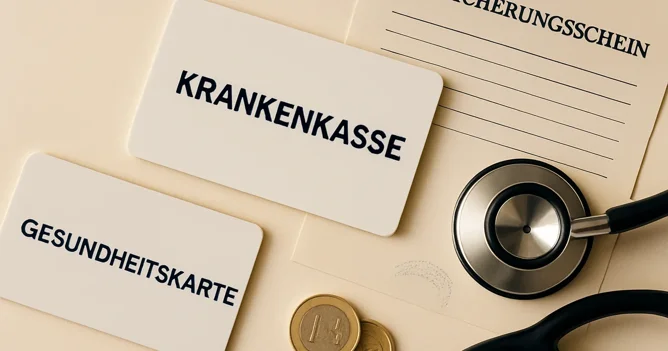
Health insurance is one of the first things to sort out properly. If you are employed and covered through public health insurance, your spouse may be eligible for family co-insurance (beitragsfreie Familienversicherung, meaning free coverage added onto your existing statutory policy) under your policy, which costs nothing extra as long as they meet the income limits. Check with your Krankenkasse (statutory health insurance fund) directly because the rules around this are strict and the details matter.
Language courses should go on the calendar early too. The Integrationskurs (state-subsidized integration course combining German language instruction with civic orientation) is something most newly arrived spouses are either entitled or required to attend. The BAMF website lists authorized providers in every city, and your local Ausländerbehörde can advise on whether attendance is mandatory in your specific case. Either way, going is a good idea. German bureaucracy does not get easier if you cannot read the letters it sends you.
On the financial side, keep records of your household income throughout the process and even after your spouse arrives. If your spouse later applies for a permanent residence permit or citizenship, proof of consistent financial stability becomes relevant again. The folder habit you built during the visa process is worth keeping.
One thing I genuinely wish someone had told me earlier: the Ausländerbehörde appointment for converting a spouse visa into a full residence permit (Aufenthaltserlaubnis) can take longer to book than people expect. Some cities are faster than others. Wolfsburg is relatively manageable in my experience, but friends in larger cities have waited months. Book that follow-up appointment before the visa expires — do not assume the buffer is longer than it is.
Live in Germany’s Expertise: Your Trusted Expat Partner
Navigating the spouse visa in Germany involves a lot of moving parts: gathering documents, booking embassy appointments, proving sufficient income, and understanding what the Ausländerbehörde (foreigners’ registration authority) actually wants to see. That’s exactly the gap liveingermany.de exists to close.
Every guide on this site is written from lived experience, not scraped from official pamphlets. The content covers everything from Anmeldung (the mandatory address registration every resident in Germany must complete within two weeks of moving) and Krankenversicherung (statutory health insurance) to banking, tax, and the paperwork trails that nobody warns you about until you’re already knee-deep in them.
Thousands of internationals use these guides every month, and the goal is always the same: give you the specific, Germany-only answer, not the vague advice that could apply anywhere. According to BAMF, Germany processed over 90,000 family reunification visas in 2024 alone, so you are far from the only one working through this process. That figure makes family reunification one of the single largest visa categories issued by German missions worldwide.
If you have a question the article doesn’t answer, the expat community and comment sections are genuinely active. Real people, real situations, no corporate runaround.
Sources & Data Verification
Every piece of information in this spouse visa guide has been cross-checked against official sources and reflects requirements as of 2026. For ongoing updates, the most reliable starting points are the German Federal Foreign Office (Auswärtiges Amt), BAMF (Bundesamt für Migration und Flüchtlinge, the Federal Office for Migration and Refugees), and the official German embassy or consulate in your home country.
The external sources referenced throughout this article include Germany-Visa.org, Germany.info Family Reunion, How-to-Germany, and Total.Law. These supplement but do not replace official government guidance.
Visa requirements, income thresholds, and processing timelines can change. According to BAMF, processing times for family reunification applications (Familienzusammenführung, meaning the formal legal process of bringing a spouse or dependent family member to Germany) vary significantly by consulate and applicant nationality, so always verify current waiting times directly with your local German mission before making travel plans.
All information verified by liveingermany.de editors and accurate as of 2026.
Ready to take the next step? Browse the full expat resources at liveingermany.de and connect with others navigating the same process.
FAQs: Spouse Visa Germany — Your Questions Answered
Getting a spouse visa in Germany involves enough moving parts that questions keep coming up even after you’ve submitted everything. These are the ones I see most often from readers.
What are the basic requirements for a spouse visa in Germany?
How long does a Germany spouse visa application take?
Can I work in Germany on a spouse visa?
Do visa-exempt nationalities still need a spouse visa for Germany?
What income is required for the sponsoring spouse in Germany?
Where can I find more practical guides about living in Germany?
The spouse visa process is bureaucratic, but it is completely manageable if you treat document preparation seriously from day one. My honest final tip: start the A1 language certificate early, because that single requirement delays more applications than anything else.

Jibran Shahid
Hi, I am Jibran, your fellow expat living in Germany since 2014. With over 11 years of personal and professional experience navigating life as a foreigner, I am dedicated to providing well-researched and practical guides to help you settle and thrive in Germany. Whether you are looking for advice on bureaucracy, accommodation, jobs, or cultural integration, I have got you covered with tips and insights tailored specifically for expats. Join me on my journey as I share valuable information to make your life in Germany easier and more enjoyable.