How to Charge VAT as a Freelancer in Germany
Your tax number has 13 digits and you need it before sending a single invoice. Here's exactly how freelancers charge VAT correctly in 2026.
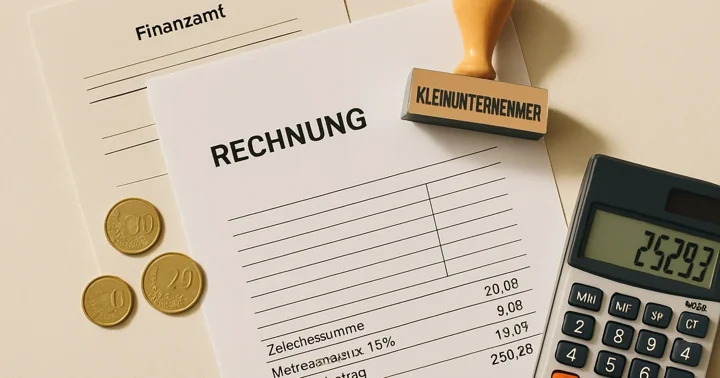
Most freelancers in Germany are required to charge 19% VAT (Umsatzsteuer) on their invoices. This requirement goes away if your annual revenue stays below the Kleinunternehmerregelung (small business rule) threshold of €25,000 in 2026, in which case you can opt out entirely.
When I registered as a freelancer in Freiburg in 2016, nobody warned me about this. I spent three weeks convinced that VAT was something only “proper businesses” dealt with, until my Steuerberater (tax advisor) set me straight at our first meeting.
The question “do I need to charge VAT as a freelancer” comes up constantly in expat communities, and it makes sense. Germany’s VAT system has real consequences for your invoices, your clients, and your annual tax return. Getting it wrong means either undercharging clients or overcollecting tax you haven’t registered to handle, both of which create headaches with the Finanzamt (German tax office).
This guide walks you through exactly how Umsatzsteuer works for freelancers, when you’re obligated to charge it, how to get your german vat number (Umsatzsteuer-Identifikationsnummer), and what goes on your invoices. Whether you just registered your Steuernummer or you’re still figuring out what a german tax id even means, this is the practical rundown.
Freelancing in Germany comes with a paper trail that would impress even the most dedicated bureaucrat. If you’ve just started and someone mentioned Umsatzsteuer (German VAT, currently set at a standard rate of 19% as of 2026) or Kleinunternehmerregelung (the small business exemption rule), and your eyes glazed over, that’s completely normal. The question most new freelancers actually need answered is simple: do I need to charge VAT as a freelancer in Germany? The short answer is: it depends on your revenue and whether you qualify for the small business exemption.
This guide walks you through exactly that. We cover when VAT applies, how to get your Steuernummer (German tax number, assigned by your local Finanzamt at no cost) and Umsatzsteuer-Identifikationsnummer (German VAT number, the EU-format identifier beginning with “DE”), how to write compliant invoices, and what the Kleinunternehmerregelung means for your situation.
A freelancer in Germany can be VAT-exempt from day one, but only if they correctly declare their intention to use the Kleinunternehmerregelung on their initial tax registration form.
What we like
- The Kleinunternehmerregelung lets low-revenue freelancers skip VAT entirely
- Germany's tax system is well-documented with official English-language resources
- Registering for a Steuernummer is free and straightforward
- Correct VAT handling builds trust with German and EU business clients
What we did not like
- VAT rules differ for domestic versus EU and non-EU clients
- Mistakes on invoices can trigger corrections and delays from the Finanzamt
- Switching between VAT schemes mid-year requires careful timing
The Real Expat Challenge: Demystifying German VAT Rules
The core question most freelancers ask when they start out is a simple one: do I need to charge VAT as a freelancer in Germany? The honest answer is: it depends, and getting it wrong costs you.
Germany’s VAT system, known as Umsatzsteuer (literally “turnover tax”), is governed by the Umsatzsteuergesetz (UStG) (the German VAT Act). Once you register as a freelancer, you receive a Steuernummer (German tax number assigned by your local Finanzamt) which handles your income tax filings. If you later register for VAT, you get a separate Umsatzsteuer-Identifikationsnummer (German VAT number, often called a USt-IdNr.), which is what clients mean when they ask for your “VAT number” on an invoice.
These two numbers are not the same thing. Many expats conflate them, and that confusion can lead to incorrectly issued invoices or missed filing deadlines. According to the German Federal Central Tax Office (Bundeszentralamt für Steuern), there were over 6.8 million registered VAT-liable businesses in Germany as of 2026.
The rules themselves are consistent once you understand them. The challenge is that most newcomers encounter them mid-invoice, with a client waiting.
Step-by-Step Guide: How to Charge VAT as a Freelancer in Germany
Charging VAT correctly as a freelancer in Germany means completing four things in the right order: registering with the tax authorities, deciding your VAT status, issuing legally compliant invoices, and filing your returns on time. Get any one of these wrong and you can face back-payments, penalties, or rejected invoices from clients. Here is exactly how each step works.
1. Register Your Freelance Activity with the Finanzamt
How do you register as a freelancer for tax purposes in Germany? You submit the Fragebogen zur steuerlichen Erfassung (tax registration questionnaire, the official form used to register a new business or freelance activity with the German tax authorities) to your local Finanzamt (tax office). Most freelancers do this through the ELSTER portal, Germany’s official online tax platform. Have your bank details ready and write a clear, specific description of your business activity — “IT consulting” or “graphic design” is fine; something vague like “freelance services” can slow things down.
Once processed, you receive two numbers. The Steuernummer (German tax number, sometimes called the “tax number Germany” in English) is your primary identifier for all correspondence with the Finanzamt. If you intend to charge VAT or work with EU clients, you also need a Umsatzsteuer-ID (German VAT number, also called the USt-IdNr., an EU-format identifier that always begins with “DE” followed by nine digits). These are not the same thing, and mixing them up on invoices is one of the most common mistakes I see new freelancers make.
2. Choose Your VAT Status: Kleinunternehmer or Standard
What VAT threshold applies to freelancers in Germany in 2026? Under § 19 UStG (the German VAT Act), freelancers whose previous year’s turnover stayed below €22,000 and who expect no more than €50,000 in the current year can opt into the Kleinunternehmerregelung (small business scheme, the VAT exemption available to low-revenue freelancers under § 19 of the German VAT Act). Under this scheme you do not charge Umsatzsteuer (VAT) on your invoices, but you also cannot reclaim VAT on business expenses. Every invoice must carry this exact phrase: “Gemäß § 19 UStG wird keine Umsatzsteuer berechnet.” Leaving it out is a compliance failure, not just a formatting issue.
If you exceed those thresholds or voluntarily opt out, the standard rate applies. According to the German Federal Central Tax Office (Bundeszentralamt für Steuern), the standard Umsatzsteuer rate in 2026 is 19%, with a reduced rate of 7% for certain services including some publishing and cultural work.
| VAT Scheme | Revenue Threshold | VAT Charged | Input VAT Reclaimable | Invoice Note Required |
|---|---|---|---|---|
| Kleinunternehmerregelung | Below €22,000 (prior year), below €50,000 (current year) | No | No | “Gemäß § 19 UStG wird keine Umsatzsteuer berechnet.” |
| Standard Rate | Above thresholds or voluntary opt-out | 19% (standard) or 7% (reduced) | Yes | Net, VAT amount, and gross shown separately |
| Voluntary Standard (Opt-in) | Any revenue level | 19% or 7% | Yes | Full VAT breakdown required |
3. Issue a VAT-Compliant Invoice
What must a legally valid VAT invoice include in Germany? A valid German VAT invoice must include your name, address, Steuernummer or Umsatzsteuer-ID, the client’s full details, a unique sequential invoice number, the date of issue, the date the service was delivered, a description of the service, and then the net amount, VAT rate, VAT amount, and gross total shown separately. Missing any of these fields means your client cannot legally deduct input VAT, which they will notice fast.
4. Collect, Report, and Pay Your VAT
VAT you charge is not your income. You collect it on behalf of the German state and pay it back via Umsatzsteuer-Voranmeldung (advance VAT returns, periodic filings submitted through ELSTER to report and pay collected VAT), filed monthly or quarterly through ELSTER depending on your liability. The Finanzamt will tell you your filing frequency when you register. At year-end you file an annual VAT return reconciling everything. Miss a deadline and interest accrues automatically under § 233a AO (the Abgabenordnung, Germany’s Federal Fiscal Code).
Practical Tips for Expats: Avoiding Common Mistakes
The single biggest mistake I see expats make is treating their Umsatzsteuer (VAT) obligations as something to sort out later. Later usually means a surprise letter from the Finanzamt (German tax office).
Open a dedicated business bank account from day one. Mixing personal and freelance income creates accounting chaos that no software can fully untangle. N26 is popular with expats for obvious reasons. It offers an English interface, fast setup, and no branch visits required.
Speaking of software, if your German isn’t fluent, use accounting tools built for expats or hire a Steuerberater (tax advisor). According to the Bundessteuerberaterkammer (the Federal Chamber of Tax Advisors in Germany), there are over 100,000 licensed tax advisors in Germany as of 2026. Finding one who works with freelancers is genuinely straightforward.
Keep digital copies of every invoice, contract, and receipt. Under § 147 AO (Abgabenordnung, the German Fiscal Code), you are legally required to retain business records for ten years. That is not a suggestion.
Do I need to charge VAT as a freelancer in Germany?
Live in Germany’s Expertise: Your Expat Partner
Navigating VAT rules as a freelancer is genuinely complicated, even for native German speakers. You need to figure out your Steuernummer (tax identification number issued by the Finanzamt), understand Umsatzsteuer (German VAT), and work out whether the Kleinunternehmerregelung applies to you. At liveingermany.de, every guide is written by someone who has actually done this in Germany, not sourced from a content agency with no skin in the game.
The guides here cover the full picture: how to register with your local Finanzamt, when you’re legally required to charge the standard 19% Umsatzsteuer rate, how to format a compliant German invoice, and what the German VAT number (Umsatzsteuer-Identifikationsnummer) is actually for. According to the Bundeszentralamt für Steuern (Germany’s Federal Central Tax Office), over 6.5 million Umsatzsteuer-Identifikationsnummern were active in Germany as of 2026. Freelancers make up a significant share of that number.
Everything here gets updated when tax rules change, not left to go stale. If you have a question the guides haven’t answered, the contact page is right there.
Citations & Further Resources
The sources below are the ones I actually used when piecing this guide together. If you want to go deeper on any specific area, these are worth bookmarking.
Bundeszentralamt für Steuern: Official VAT registration portal
§ 19 UStG: Kleinunternehmerregelung (small business exemption), full legal text
Norman.finance: Umsatzsteuer explained for freelancers
MyStartupGermany: German tax IDs for freelancers
germany-visa.org: Taxes for freelancers and self-employed workers
For more context on how VAT fits into the broader German tax picture, the full breakdown lives here:
And if you’re still sorting out the financial basics as a freelancer, this is a good next stop:
Frequently Asked Questions: VAT for Freelancers in Germany
These are the questions I see most often from freelancers trying to figure out their VAT obligations in Germany. The answers are kept short and direct.
Do I need to charge VAT as a freelancer in Germany?
What is a Steuernummer and do I need one?
What is the difference between a Steuernummer and a German tax ID?
What is a German VAT number?
What is a tax number in Germany?
Can expats register for VAT in Germany?
The honest final tip: get your Steuernummer sorted before you send your first invoice. Invoices without it are technically non-compliant and your client may refuse to pay until you correct them. It sounds bureaucratic because it is, but once the registration is done, the system is actually quite manageable.

Jibran Shahid
Hi, I am Jibran, your fellow expat living in Germany since 2014. With over 11 years of personal and professional experience navigating life as a foreigner, I am dedicated to providing well-researched and practical guides to help you settle and thrive in Germany. Whether you are looking for advice on bureaucracy, accommodation, jobs, or cultural integration, I have got you covered with tips and insights tailored specifically for expats. Join me on my journey as I share valuable information to make your life in Germany easier and more enjoyable.