Filling Out the Steuerliche Erfassung Form for Expats
Fill out the Steuerliche Erfassung form in under 30 minutes. Step-by-step guide for expats navigating German tax registration in 2026.
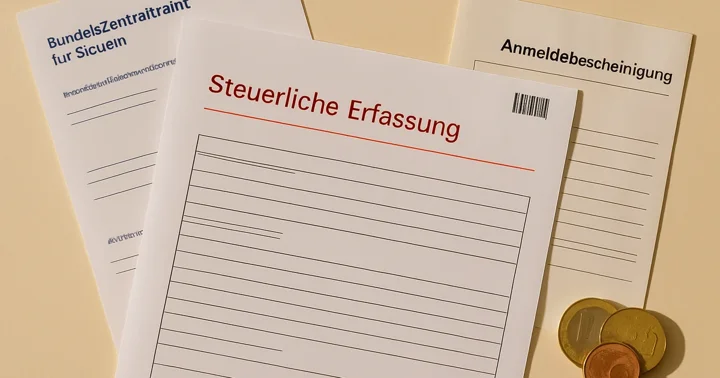
The Fragebogen zur steuerlichen Erfassung (tax registration questionnaire) is a mandatory form that every freelancer, self-employed person, or new business owner in Germany must submit to their local Finanzamt (tax office) — typically within one month of starting activity. Get it wrong or late, and the Finanzamt will assign your tax number without your input, which can create complications that take months to untangle.
When I registered as a freelancer in Freiburg in 2015, I spent an embarrassing amount of time staring at the form without understanding half of it. There was no English version anywhere obvious, and the official guidance assumed you already knew what a Steueridentifikationsnummer (personal tax identification number) was. I eventually pieced it together, but it cost me a week I didn’t have.
This guide covers the whole process in plain English: what the form actually asks, how to fill in each section correctly, where to find the fragebogen zur steuerlichen erfassung in English, and what the fragebogen zur steuerlichen erfassung deadline in Germany actually is. According to the Bundeszentralamt für Steuern (German Federal Central Tax Office), over 1.5 million tax identification numbers were issued to newly registered taxpayers in Germany in 2024 alone.
Moving to Germany and Overwhelmed by Bureaucracy? Read This First!
The Fragebogen zur steuerlichen Erfassung (tax registration questionnaire for the German Finanzamt) is the first real bureaucratic hurdle most freelancers and small business owners face here. It’s dense, it’s entirely in German, and it arrives at exactly the moment you’re still figuring out how bins work and whether your Anmeldung (official address registration) was done correctly.
The good news is that the form is logical once you understand what it’s actually asking. According to the Bundeszentralamt für Steuern, every self-employed person operating in Germany must complete this registration before issuing their first invoice. There is no grace period built into German tax law for not knowing this existed.
In practical terms: every freelancer and self-employed person in Germany must submit the Fragebogen zur steuerlichen Erfassung within four weeks of starting activity, and failing to do so can delay receipt of a Steuernummer (tax number) by several additional weeks on top of the standard two-to-six-week processing time.
What we like
- Completing the form correctly gets you a Steuernummer fast, often within 2–4 weeks
- Online submission via ELSTER cuts out any postal delays
- Registering early protects you from backdated penalty interest
- A Steuernummer unlocks legal invoicing and ELSTER tax refund submissions immediately
What we did not like
- The form is available only in German, with no official fragebogen zur steuerlichen erfassung English version provided by the Finanzamt
- Mistakes on the profit forecast fields can trigger unwanted Vorauszahlungen (advance tax payments)
- Finding reliable finanzamt english contact support varies enormously by city
The Expat Challenge: German Bureaucracy Meets Culture Shock
Germany is famously efficient, but only once you understand its systems. For freelancers and the self-employed, the Fragebogen zur steuerlichen Erfassung (tax registration questionnaire) is the formal gateway to operating legally. Without it, you cannot invoice clients, register for VAT (Umsatzsteuer, the German value-added tax), or open a business bank account.
The catch for expats is real. Since 2021, the entire process runs through the ELSTER portal and is available only in German. There is no official fragebogen zur steuerlichen erfassung English version, and the Finanzamt (local tax office) does not offer guided support for non-German speakers. According to the German Federal Central Tax Office (Bundeszentralamt für Steuern), over 1.3 million new tax registrations were processed in 2024 alone, yet expat-specific guidance remains scarce.
Errors are costly. Incomplete submissions can delay your Steuernummer (tax identification number) by several weeks, which directly stalls your ability to trade. The fragebogen zur steuerlichen erfassung deadline in Germany is typically four weeks after starting self-employed activity, so there is not much room to restart from scratch.
In short: in Germany, there is no legal route to issuing a compliant invoice without a Steuernummer, and there is no route to a Steuernummer without completing the Fragebogen zur steuerlichen Erfassung first.
The Step-by-Step Expat Guide: Filling Out the Fragebogen zur steuerlichen Erfassung
How do you fill out the Fragebogen zur steuerlichen Erfassung as an expat in Germany? You complete it through ELSTER (Germany’s official online tax portal) using your personal documents, submit it digitally, and wait two to six weeks for your Steuernummer (tax number) to arrive by post.
The form itself is only available in German, which trips up a lot of newcomers. Before you even open it, there are two things worth sorting out: access to ELSTER and a small stack of documents you’ll need to hand.
Getting Set Up on ELSTER
Head to elster.de and create a free account. The activation code arrives by post and typically takes three to seven days to reach you, so factor that into your timeline if you’re working against the fragebogen zur steuerlichen Erfassung deadline Germany gives you (usually four weeks after starting self-employment). Once you’re in, the portal is entirely in German. Google Translate handles the basics well enough, and third-party platforms like Sorted or Accountable offer interfaces in English and can submit completed registrations directly to your Finanzamt (local tax office).
If you’d rather deal with a human, many Finanzamt offices do have English-speaking staff or can direct you to someone who does. Searching “Finanzamt English contact” alongside your city name often surfaces direct email addresses or phone numbers on the official Bayernportal or your state’s finance ministry website.
Before sitting down with the form, gather your Anmeldung (address registration certificate), your Steuer-ID (11-digit personal tax identification number sent to you by post when you first registered in Germany), your German IBAN, and a clear description of your planned freelance or business activity.
Working Through the Key Sections
The form is long but most fields are straightforward once you know what each one is asking for.
The opening block asks for your Finanzamt. You can look yours up by postcode at the official Finanzamt-Finder on the Bundeszentralamt für Steuern website. Leave the Steuernummer (tax number assigned by the Finanzamt) field blank if this is your first registration. Your Steuer-ID goes in a separate field. It is the permanent 11-digit identification number issued at birth or first registration, and it is not the same thing as the Steuernummer. That distinction confuses almost everyone the first time.
The personal data section should match your Anmeldung exactly: name, date of birth, German address. The religion field determines Kirchensteuer (church tax, currently 8% in Bavaria and Baden-Württemberg and 9% in all other federal states, calculated as a percentage of your income tax). If you’re not affiliated with a tax-collecting church, enter VD (konfessionslos, meaning no religious denomination). Protestants enter EV, Catholics enter RK.
For the business description, be specific. “Freelance software developer” or “graphic designer for print and digital media” works far better than “creative services.” Vague descriptions slow the process down and occasionally trigger follow-up queries from your Finanzamt.
The income estimate section asks for your expected annual turnover (Umsatz) and profit (Gewinn) in your first and second year. According to the Bundeszentralamt für Steuern, you are not legally penalised for estimating conservatively, but underestimates can result in an unexpectedly large tax payment later. A realistic figure protects you.
Finally, the Kleinunternehmerregelung asks whether your annual turnover will stay below €25,000. It is the small business VAT exemption under § 19 UStG, the German Value Added Tax Act, and as of 2025 the threshold was raised from the previous €22,000 limit. If yes, you can opt out of collecting VAT entirely, which simplifies your bookkeeping considerably. For accounting method, almost every freelancer defaults to Einnahmenüberschussrechnung (EÜR, a straightforward cash-basis income surplus calculation).
Practical Tips for Expats: Make Tax Registration in Germany Stress-Free
The Fragebogen zur steuerlichen Erfassung (tax registration questionnaire) is genuinely manageable once you know where the friction points are. Most expats hit the same three walls: the language barrier on ELSTER, confusion around German tax terminology, and uncertainty about deadlines. There is no official fragebogen zur steuerlichen Erfassung deadline set in stone for freelancers, but submitting promptly after starting self-employment keeps you on the right side of the Finanzamt (local tax office).
For the language problem, install the DeepL browser extension before you even open ELSTER. It handles the portal’s phrasing far better than Google Translate. If your home country’s tax authority has issued a certificate of foreign tax registration, keep it handy. The Finanzamt may request a Bescheinigung der ausländischen Steuerbehörde (nachweis über die steuerliche erfassung, meaning a certificate from a foreign tax authority confirming prior tax registration abroad) if you have cross-border income. Most expats never need it, but having it scanned saves a scramble later.
Document everything digitally. Store your Anmeldung (address registration certificate), Steuer-ID (tax identification number), and every submission confirmation from ELSTER in one folder. If you ever need to contact the Finanzamt and your German isn’t strong yet, searching “Finanzamt English contact” for your specific office often surfaces a direct email address where written queries are accepted. According to the Bundeszentralamt für Steuern, over 11 million Steuer-IDs were issued or reissued in 2025 alone, so the system handles volume, but individual follow-up still requires your own records.
Liveingermany.de: Your Trusted Expat Ally in Germany
This site exists because German bureaucracy is genuinely hard, and most guides written for expats are either outdated or built for clicks rather than clarity. Every article here comes from real experience navigating the system. That means the Finanzamt, the Anmeldung (address registration), the health insurance maze, all of it.
On topics like the Fragebogen zur steuerlichen Erfassung, you need accurate, Germany-specific guidance. Not generic advice recycled from a content farm. That is what liveingermany.de is built to provide. According to Destatis (the German Federal Statistical Office), over 10 million foreign nationals were living in Germany as of 2024, and a significant share of them face exactly these tax registration questions every year.
Whether you are searching for the fragebogen zur steuerlichen erfassung in English, trying to understand a Bescheinigung der ausländischen Steuerbehörde (certificate from a foreign tax authority confirming your prior tax registration), or just need a plain-language explanation of a Finanzamt letter, you will find it here. Every guide is verified for 2026 and cites official German sources. No padding, no guesswork.
FAQ: German Tax Registration for Expats — Your Top Questions Answered
Is there an English version of the Fragebogen zur steuerlichen Erfassung?
What is the Fragebogen zur steuerlichen Erfassung deadline in Germany?
How long does it take to receive a Steuernummer after submitting the form?
Can I invoice clients before receiving my Steuernummer?
What is the Bescheinigung der ausländischen Steuerbehörde?
How do I contact the Finanzamt in English?
Can I get a tax refund through ELSTER?
German Bureaucracy Doesn’t Have to Be a Dealbreaker
The Fragebogen zur steuerlichen Erfassung (tax registration questionnaire for the Finanzamt) looks intimidating the first time you see it. But once you understand what each field is actually asking, it becomes manageable. Plenty of expats complete it without professional help, even without fluent German.
My honest final tip: don’t sit on this. The fragebogen zur steuerlichen Erfassung deadline in Germany is generally four weeks after you start self-employed activity, and missing it can delay your Steuernummer, which then blocks invoicing. The Finanzamt English contact options are limited, but most offices accept written inquiries in English, especially in larger cities.
For ongoing tax work, ELSTER (the official German tax portal) handles your annual tax declaration in Germany and is where you’ll later claim your ELSTER tax refund if you overpaid. It’s free and more capable than most people expect.
Everything you need to navigate taxes and finances in Germany is on this site.
Is there a fragebogen zur steuerlichen Erfassung in English?
What is the fragebogen zur steuerlichen Erfassung deadline in Germany?
Can I contact the Finanzamt in English?
What is the Bescheinigung der ausländischen Steuerbehörde?
How does the ELSTER tax refund work?
What is a tax declaration in Germany and who needs to file one?

Jibran Shahid
Hi, I am Jibran, your fellow expat living in Germany since 2014. With over 11 years of personal and professional experience navigating life as a foreigner, I am dedicated to providing well-researched and practical guides to help you settle and thrive in Germany. Whether you are looking for advice on bureaucracy, accommodation, jobs, or cultural integration, I have got you covered with tips and insights tailored specifically for expats. Join me on my journey as I share valuable information to make your life in Germany easier and more enjoyable.