Paying Taxes as a Freelancer in Germany
Freelancers in Germany pay up to 4 separate tax filings per year. Here's exactly what you owe, when, and how to avoid costly mistakes in 2026.
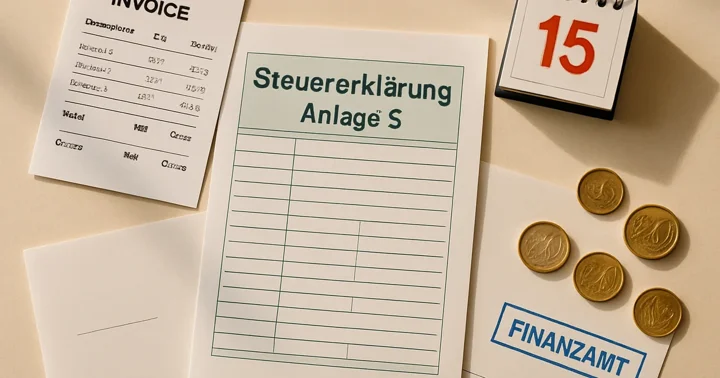
Paying Taxes as a Freelancer in Germany: Complete 2025 Guide for Expats
Freelancers in Germany pay income tax (Einkommensteuer) at rates between 14% and 45% depending on annual profit, plus trade tax (Gewerbesteuer, a municipal business tax) if registered as a Gewerbetreibender (commercial trader) rather than a Freiberufler (liberal professional). Getting your head around freelance tax in Germany takes time. In 2020, I spent an embarrassing number of evenings at my kitchen table in Freiburg trying to decode my first Steuererklärung (annual tax return), convinced I was missing something important. I was, as it turned out.
Tax compliance for freelancers in Germany is genuinely more complex than in many countries, because your obligations depend on how you’re classified, whether you’re VAT-registered, and how you handle quarterly prepayments. According to Destatis, the number of self-employed people in Germany stood at approximately 3.9 million in 2024, yet the rules governing freelancer taxes in Germany remain poorly understood even by long-term expats.
This guide covers everything: the difference between Freiberufler and Gewerbetreibender, income tax brackets, VAT (Umsatzsteuer, Germany’s value-added tax), trade tax, pension contributions, and the deadlines you cannot afford to miss in 2026.
Freelance tax rules in Germany trip up even experienced expats. The system involves multiple tax types, strict deadlines, and forms that arrive only in German. If you’ve ever stared at a Steuererklärung (annual income tax return) and felt genuinely lost, you’re in very good company.
Here’s the honest answer to what the tax rules for freelancers in Germany actually are: you’ll typically deal with income tax (Einkommensteuer), trade tax (Gewerbesteuer) depending on your legal status, and VAT (Umsatzsteuer, value-added tax) once your revenue crosses certain thresholds. According to Destatis, Germany recorded over 4.1 million self-employed workers in 2024, many of them navigating exactly this landscape. Tax compliance for freelancers isn’t optional or casual here. The Finanzamt (tax office) expects precision.
A freelancer in Germany who qualifies as a Freiberufler pays no trade tax, files income tax annually with an EÜR profit statement, and only charges VAT once revenue exceeds €25,000 per year. Getting your classification right is one of the most financially significant decisions you’ll make at registration.
This guide covers freelance taxes in Germany for 2026. It walks through registration, income tax, VAT, quarterly prepayments, deductions, and the mistakes that cost people real money. Whether you’re brand new to being self-employed in Germany or you’ve been freelancing for a couple of years and want to stop guessing, this is the practical breakdown you need.
What we like
- Freelancers (*Freiberufler*) are exempt from *Gewerbesteuer*, saving significant money compared to registered tradespeople
- The *Kleinunternehmerregelung* (small business VAT exemption) lets you skip VAT administration below €25,000 annual revenue in 2026
- Generous deductible expenses can substantially reduce your taxable income
- Germany's double taxation treaties cover over 90 countries, protecting many expat freelancers from being taxed twice
What we did not like
- Quarterly prepayments (*Vorauszahlungen*, advance tax payments) can create cash flow pressure, especially in your first year
- All official correspondence from the Finanzamt arrives in German only
- Missing a filing deadline can trigger automatic late penalties with no grace period
Expat Challenges: Navigating German Tax as a Freelancer
The German tax system doesn’t ease you in gently. For expats freelancing here, the terminology alone feels like a foreign language inside a foreign language. Terms like EÜR (Einnahmenüberschussrechnung, the simplified profit-and-loss statement required by the Finanzamt), Umsatzsteuer (VAT), and Grundfreibetrag (the tax-free personal allowance, set at €12,096 for singles in 2026 according to the Bundesministerium der Finanzen) appear everywhere, and making a mistake with any of them can trigger a formal letter from your local Finanzamt before you’ve even found a good Bäcker nearby.
The added difficulty for expats is the gap between what you knew at home and how Germany does things. Tax rules for freelancers in Germany are built around quarterly Vorauszahlungen (advance tax payments), strict documentation, and a separation between Freiberufler (liberal professionals like designers, journalists, or architects, as defined under § 18 EStG) and Gewerbetreibende (registered commercial trade businesses). Getting that classification wrong has real financial consequences.
That said, the system rewards people who take it seriously. Once you understand the structure, freelance tax compliance in Germany becomes less of a trap and more of a process. A systematic approach works well here. Proper bookkeeping, correct registration, and timely filings remove most of the stress.
What Freelance Expats Must Know in 2025: Taxes, Rules, and Compliance
How are freelancers taxed in Germany? As of 2026, freelancers pay progressive income tax between 14% and 45% on net profit, may charge 19% VAT above the €25,000 Kleinunternehmerregelung threshold, and face no trade tax if correctly classified as Freiberufler.
Tax rules for freelancers in Germany are more structured than they first appear, which is genuinely good news once you understand the system. The core question most people ask is: what are the tax rules for freelancers operating in Germany? The short answer is that you deal with three main taxes. These are income tax, VAT, and potentially the solidarity surcharge, while being exempt from two taxes that trip up newcomers: trade tax and corporate tax.
Income Tax (Einkommensteuer)
How much income tax does a freelancer in Germany pay? Germany taxes freelance income progressively under § 32a EStG (Einkommensteuergesetz, the German Income Tax Act), with rates running from 14% on lower profits up to 42% for most high earners, and a top rate of 45% on income above €277,826 in 2026.
The Grundfreibetrag (tax-free personal allowance) sits at €12,096 for singles in 2025, meaning anything below that threshold is untaxed. Your taxable income as a freelancer includes all revenue from self-employment, plus any additional income from rent, interest, or investments if those apply to your situation.
Filing-wise, you submit an annual Einkommensteuererklärung (income tax return) along with an EÜR, which is the Einnahmen-Überschuss-Rechnung or simplified profit and loss statement. Most freelancers also make quarterly advance payments, the Einkommensteuer-Vorauszahlungen (quarterly income tax prepayments), based on the previous year’s income. After filing your annual return, the Finanzamt (local tax office) reconciles those advance payments against your actual liability. You either owe more or get a refund. The first step before any of this is registering your freelance activity with your local Finanzamt to receive your Steuernummer (tax identification number).
VAT (Umsatzsteuer)
What is the VAT rate for freelancers in Germany? Germany’s standard Umsatzsteuer (value-added tax) rate is 19%, with a reduced rate of 7% applying to certain services and products such as books and some cultural services. As a self-employed person in Germany, you are generally required to charge VAT on your invoices and remit it to the Finanzamt through regular Umsatzsteuer-Voranmeldungen (advance VAT returns), filed either monthly or quarterly depending on your turnover, with an annual summary on top.
There is one important exception. Under the Kleinunternehmerregelung (small business VAT exemption, governed by § 19 UStG), freelancers whose revenue stays below €25,000 in the current year can opt out of charging and filing VAT entirely. This simplifies your admin considerably, though it also means you cannot reclaim VAT on your business expenses. Whether the Kleinunternehmerregelung makes sense for you depends heavily on your client base and cost structure, so it is worth thinking through before you register.
Solidarity Surcharge (Solidaritätszuschlag)
The Solidaritätszuschlag is a surcharge on top of income tax. It was originally introduced to fund German reunification and is sometimes called the solidarity surcharge, but since the 2021 reforms, the vast majority of earners no longer pay it. According to the Federal Ministry of Finance, around 90% of taxpayers are fully exempt. If your freelance income stays at moderate levels, you almost certainly fall outside the threshold.
Two Taxes That Do Not Apply to You
Registered Freiberufler (liberal professionals, as legally defined under § 18 EStG) are exempt from Gewerbesteuer, which is the trade tax levied as a municipal charge on commercial business income. This is a meaningful financial advantage over gewerblich (commercially) registered businesses, which can face trade tax rates of 7% or more depending on the municipality. According to Destatis, the effective average trade tax burden across German municipalities sits at roughly 14% of taxable business income when municipal multipliers are factored in, making the Freiberufler exemption a significant annual saving. Körperschaftsteuer (corporate tax) also does not apply, since that is levied only on legal entities like GmbHs. GmbH stands for Gesellschaft mit beschränkter Haftung, which is a limited liability company, and the tax simply does not touch individual freelancers.
| Tax | Applies to Freiberufler? | Rate | Notes |
|---|---|---|---|
| Einkommensteuer (Income Tax) | Yes | 14% to 45% | Progressive; Grundfreibetrag €12,096 in 2026 |
| Umsatzsteuer (VAT) | Yes, above threshold | 19% (standard), 7% (reduced) | Exempt below €25,000 via Kleinunternehmerregelung |
| Solidaritätszuschlag (Solidarity Surcharge) | Most are exempt | Varies | ~90% of taxpayers pay nothing since 2021 |
| Gewerbesteuer (Trade Tax) | No | 7%+ depending on municipality | Only applies to Gewerbetreibende |
| Körperschaftsteuer (Corporate Tax) | No | 15% | Only applies to legal entities like GmbH |
Do freelancers in Germany pay trade tax?
What is the VAT threshold for freelancers in Germany?
Live in Germany’s Expertise: Empowering Expats, Every Step
Every guide on this site comes from real experience navigating German bureaucracy as a foreigner. The team behind liveingermany.de has worked through misread tax letters, late Steuererklärung (annual income tax return) submissions, and the particular confusion of figuring out freelance tax Germany rules without a German-speaking accountant on speed dial. Those hard lessons are exactly what shape the content here.
Tax compliance for freelancers in Germany is genuinely complex. Between income tax, trade tax thresholds, and quarterly Vorauszahlungen (advance tax payments), the system demands attention. According to the Bundeszentralamt für Steuern (Germany’s Federal Central Tax Office), over 4.5 million self-employed individuals filed tax returns in Germany in 2024. You are far from alone in finding it overwhelming.
Beyond taxes, liveingermany.de covers housing, health insurance, banking, and more. All of it is written specifically for expats arriving without a local support network. Every article targets the real questions people ask, shaped by feedback from thousands of readers.
FAQ: Freelancer Tax Rules in Germany
Here are straight answers to the questions I see expat freelancers ask most often about Steuern (taxes) in Germany.
What are the tax rules for freelancers in Germany?
How do freelance taxes in Germany actually work?
When are the key deadlines for freelancer taxes in Germany?
Do freelancers in Germany pay VAT as well as income tax?
Can I deduct business expenses as a self-employed person in Germany?
Do I need a Steuerberater as a freelancer in Germany?
Tax compliance for freelancers in Germany is manageable once the system clicks into place. Get registered early, track every expense from day one, and if the German bureaucracy feels overwhelming, a good Steuerberater pays for themselves. For a broader look at managing your finances here, the link below is a solid next step.

Jibran Shahid
Hi, I am Jibran, your fellow expat living in Germany since 2014. With over 11 years of personal and professional experience navigating life as a foreigner, I am dedicated to providing well-researched and practical guides to help you settle and thrive in Germany. Whether you are looking for advice on bureaucracy, accommodation, jobs, or cultural integration, I have got you covered with tips and insights tailored specifically for expats. Join me on my journey as I share valuable information to make your life in Germany easier and more enjoyable.