How to Issue a Correct Invoice in Germany for Expats
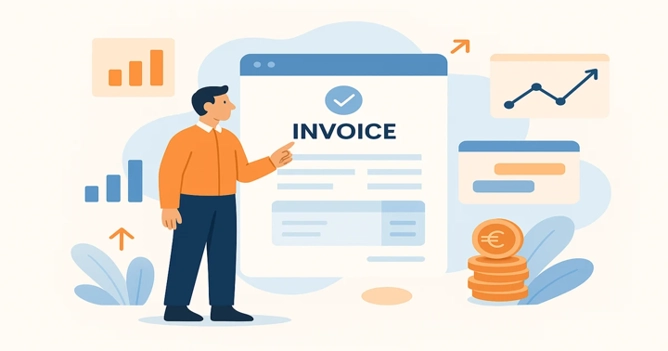
A correct invoice in Germany must include at least 8 mandatory fields under § 14 UStG (the German VAT Act), and missing even one can get the document rejected by your client’s accounting department or flagged during a tax audit. That is not a technicality you want to learn the hard way.
Back in 2016 in Freiburg, I sent my first freelance invoice to a German client without a Steuernummer (tax identification number) on it. They paid eventually, but their bookkeeper sent it back twice first.
Invoicing customers in Germany follows stricter rules than most expats expect. Whether you are a freelancer, a small business owner, or a contractor figuring out how to invoice your customers in Germany for the first time, the requirements are set by German tax law and apply regardless of your nationality. According to the Bundeszentralamt für Steuern (Federal Central Tax Office), there were over 4.3 million registered self-employed individuals in Germany in 2024, many of them navigating these exact requirements. Getting your German invoice right from the start protects you from delayed payments, rejected submissions, and unnecessary back-and-forth with clients.
This guide covers every mandatory element, VAT rules, common invoice issues, and what small business owners should know about issuing a legally compliant invoice in Germany in 2026.
Getting your first German invoice right matters more than most expats expect. Miss a required field and your client’s accountant will send it back. Issue it without a Steuernummer (tax identification number assigned by the Finanzamt, the local German tax office) and you could face delays getting paid. Germany has specific legal requirements for invoices under § 14 UStG (Umsatzsteuergesetz, the German VAT Act), and they apply to freelancers and small business owners just as much as to large corporations.
If you’re wondering how to invoice your customers in Germany correctly, or why your current invoice template from back home isn’t cutting it, this guide covers everything. We’ll walk through every mandatory field, VAT rules including the Kleinunternehmerregelung (small business exemption under § 19 UStG), invoice numbering, and deadlines.
What we like
- Correct invoices ensure faster payment and zero disputes with German clients
- Understanding § 14 UStG protects you from costly VAT penalties
- Kleinunternehmerregelung can simplify invoicing if your annual turnover stays below €25,000 in 2026
- Digital invoices are legally valid in Germany, saving significant admin time
What we did not like
- German invoicing law requires more mandatory fields than most expats are used to
- Errors can trigger audits or payment rejections from German accounting departments
- VAT registration thresholds and rules change, requiring you to stay current
Expat Challenges: Navigating Invoices and German Bureaucracy
Invoicing customers in Germany as a foreigner is genuinely confusing at first. The client asking for a “korrekte Rechnung mit Mehrwertsteuer” (correct invoice with VAT) isn’t being difficult. They need it to reclaim VAT from the Finanzamt (German tax authority), and a single missing field means their accountant rejects the whole document.
The stakes are real. According to the Bundeszentralamt für Steuern (Federal Central Tax Office), a non-compliant invoice cannot be used to recover Vorsteuer (input VAT, meaning the VAT a business paid on purchases that it can reclaim from the tax office), which means your client loses money and you lose trust. Miss the Leistungsdatum (date of service delivery), forget your Steuernummer (tax number), or skip the sequential invoice number, and the whole thing falls apart. German authorities are thorough in a way that surprises many newcomers.
The good news is that the rules are written down clearly. The legal requirements for a valid German invoice come from § 14 UStG (Umsatzsteuergesetz, the German VAT Act). Once you know exactly what that law requires, invoicing customers in Germany stops feeling like a minefield. The next sections cover precisely that.
How to Issue a Correct Invoice in Germany: What You Actually Need to Include
How do you issue a correct invoice in Germany? A legally valid German invoice must contain all mandatory fields specified under § 14 UStG, be issued within six months of the service date, carry a sequential invoice number, and correctly state either the applicable VAT rate or the reason for VAT exemption. Issuing a correct invoice in Germany as an expat or foreign entrepreneur is about more than ticking boxes. Get it wrong and your client’s tax office may reject their VAT deduction claim, which means an uncomfortable conversation and a lost client relationship.
The Mandatory Fields Under German Law
What fields must a German invoice include? Under § 14 UStG, every standard invoice in Germany must contain at least 8 specific elements or it can be legally rejected. According to the Umsatzsteuergesetz (UStG, Germany’s VAT Act), every standard invoice must contain the following:
Your full legal name and address, plus the full name and address of your customer. A unique, consecutive invoice number with no gaps and no duplicates, ever. The date of issue. A clear description of the goods or services provided, including quantity where applicable. The date of supply if it differs from the invoice date. The net amount excluding VAT. The applicable VAT rate and the VAT amount in euros. The gross total. Your own Umsatzsteuer-Identifikationsnummer, which is the EU-wide VAT identification number starting with “DE” for German businesses. Your customer’s VAT ID for any intra-EU B2B transaction. A reference to any tax exemption or reverse charge mechanism where applicable. The Reverse-Charge-Verfahren is the EU rule that shifts VAT liability to the buyer.
According to Eurofiscalis, invoice errors are among the most common causes of rejected VAT claims in Germany. One missing field can invalidate the whole document.
Deadlines, Format, and Archiving
How long do you have to issue an invoice in Germany? You must issue invoices within six months of delivering the goods or services. Both paper and electronic formats are legally valid, provided the invoice remains legible, is protected from alteration, and is archived correctly. All invoices must be stored for ten years under § 14b UStG (Umsatzsteuergesetz), regardless of whether they are digital or printed.
On e-invoicing: Germany introduced mandatory structured e-invoicing for B2B transactions effective January 2025, with stricter requirements phased in through 2028 per the Bundesministerium der Finanzen timeline. E-Rechnung refers to machine-readable electronic invoices in formats like XRechnung or ZUGFeRD. If you are invoicing German businesses, this is not optional anymore. Formats like XRechnung and ZUGFeRD are now the relevant standards to know.
Simplified Invoices Under €250 (Kleinbetragsrechnung)
For invoices not exceeding €250 gross, Germany allows a simplified format called a Kleinbetragsrechnung (small-amount invoice). You only need: your name and address, the date of issue, a description of the goods or services, the total amount including VAT, and the applicable VAT rate or exemption note. The customer’s details and your VAT ID are not required at this threshold. This simplification comes directly from § 33 UStDV (Umsatzsteuer-Durchführungsverordnung, the German VAT Implementation Ordinance).
Cross-Border B2B Sales Within the EU
When invoicing customers in Germany from another EU country, or invoicing an EU business from Germany, the reverse charge mechanism applies to most B2B supplies of services. This means VAT is not charged by you. Instead, the customer accounts for it in their own country. Your invoice must explicitly state “Reverse Charge” and include both your VAT ID and your customer’s VAT ID. Omitting this note is a common invoice issue that causes delays and compliance headaches.
A German invoice that omits even one mandatory field under § 14 UStG is legally invalid, meaning your client cannot use it to reclaim Vorsteuer and you may face penalties during a Finanzamt audit.
Practical Tips for Expats Invoicing in Germany
Getting the mechanics right when invoicing customers in Germany comes down to a few habits that take some upfront effort but save real headaches later.
Use invoicing software that explicitly supports German compliance requirements. The table below compares the three tools most commonly used by expat freelancers and small business owners in Germany:
| Tool | German VAT compliance | E-Invoicing (XRechnung/ZUGFeRD) | Bilingual invoices | Pricing (from) |
|---|---|---|---|---|
| Lexoffice | Yes | Yes | Yes | €7.90/month |
| Fastbill | Yes | Partial | Yes | €9.00/month |
| Sevdesk | Yes | Yes | Yes | €8.90/month |
All three generate invoices that handle Umsatzsteuer (VAT, the German value-added tax) calculations automatically and are already being updated for the mandatory e-invoicing rollout that applies to B2B transactions from 2025 onward under the Wachstumschancengesetz (Germany’s Growth Opportunities Act). This matters if you work with German corporate clients regularly.
Keep your Steuernummer (tax identification number issued by your Finanzamt) and, if applicable, your Umsatzsteuer-Identifikationsnummer somewhere you can copy-paste them quickly. The Umsatzsteuer-Identifikationsnummer is a business-specific EU VAT ID that starts with “DE” for Germany. Forgetting either on an invoice is one of the most common invoice issues expats run into, and German clients will often reject the invoice outright rather than just asking you to fix it informally.
For anyone doing corporate travel billing, the easiest way to get a single VAT-compliant monthly invoice for all corporate travel in Munich or any other German city is to use a travel management platform like Circula or TravelPerk, which consolidate receipts into one compliant document automatically.
(Affiliate links — we may earn a commission at no extra cost to you.)
Live in Germany’s Expertise: Your Trusted Resource
Everything on this site comes from real expat experience combined with direct research into German law and official sources. This guide draws on years of navigating freelance paperwork under German tax rules, cross-referenced with guidance from the Bundeszentralamt für Steuern (Germany’s Federal Central Tax Office) and the Bundesministerium der Finanzen (Federal Ministry of Finance). When a detail about a correct german invoice format changes, we update accordingly.
Whether you are figuring out how to invoice your customers in Germany for the first time, or trying to understand what a VAT-compliant german invoice actually requires, this site exists to give you answers that are specific, current, and honest. According to Destatis (Germany’s Federal Statistical Office), self-employment among foreign nationals in Germany grew steadily through 2024 and into 2025, making guides like this more relevant than ever.
Thousands of expats use liveingermany.de every month. If this guide helped you issue invoice correctly, share it with someone who needs it.
Sources & Further Reading
The information in this guide draws from several reliable sources worth bookmarking if you want to go deeper on invoicing customers in Germany or verify any detail for your own situation.
Eurofiscalis: Invoicing in Germany
Enty: VAT Invoice Requirements in Germany
Stripe: Invoicing Best Practices for Germany
MyLifeinGermany: VAT in Germany – Comprehensive Guide for Expats
For anything related to the financial side of freelancing or self-employment, the
section of this site covers accounts, tax tools, and more.All data in this article has been verified as of 2026. German invoice regulations fall under § 14 UStG (Umsatzsteuergesetz, the German VAT Act), and the rules can shift with legislative updates. For anything specific to your business structure or tax situation, consulting a Steuerberater (certified tax advisor in Germany) is genuinely worth the cost. If you found this guide useful, the article on how to find a good Steuerberater in Germany is a natural next step, especially if you are just getting started with freelance work and are not sure where to begin with finding professional tax help.
Frequently Asked Questions About Invoicing in Germany
Invoicing customers in Germany follows strict rules under § 14 UStG (the German VAT Act), and small mistakes can delay payment or trigger a Finanzamt (tax office) query. These questions cover the gaps that trip up most expats.
One practical tip before you go: store every issued invoice for at least ten years. German law (§ 147 AO, the Abgabenordnung, which is Germany’s General Tax Code governing record-keeping obligations) requires that retention period for business records, and the Finanzamt can request them at any audit.

Jibran Shahid
Hi, I am Jibran, your fellow expat living in Germany since 2014. With over 11 years of personal and professional experience navigating life as a foreigner, I am dedicated to providing well-researched and practical guides to help you settle and thrive in Germany. Whether you are looking for advice on bureaucracy, accommodation, jobs, or cultural integration, I have got you covered with tips and insights tailored specifically for expats. Join me on my journey as I share valuable information to make your life in Germany easier and more enjoyable.